A thin, hand-trowelled coating without grout lines, often laid over old tiles. Where it works, what decides the result, what it costs and how it looks in a home.
Microcement is a thin, cement-based coating that is trowelled on by hand in several layers. The result is one continuous surface without grout lines, with a soft, slightly clouded look that sits as comfortably in a modern apartment as in an old stone house. Its close relative, epoxy, is a two-component resin poured or rolled onto a floor, which hardens into a smooth, tough surface that is very easy to clean.
In Istria it is chosen for three reasons above all: there are no grout lines to scrub, the calm surface works with strong light and natural stone, and it can often go straight over existing, firmly bonded tiles. That means less demolition, less dust and floor heights that barely change.
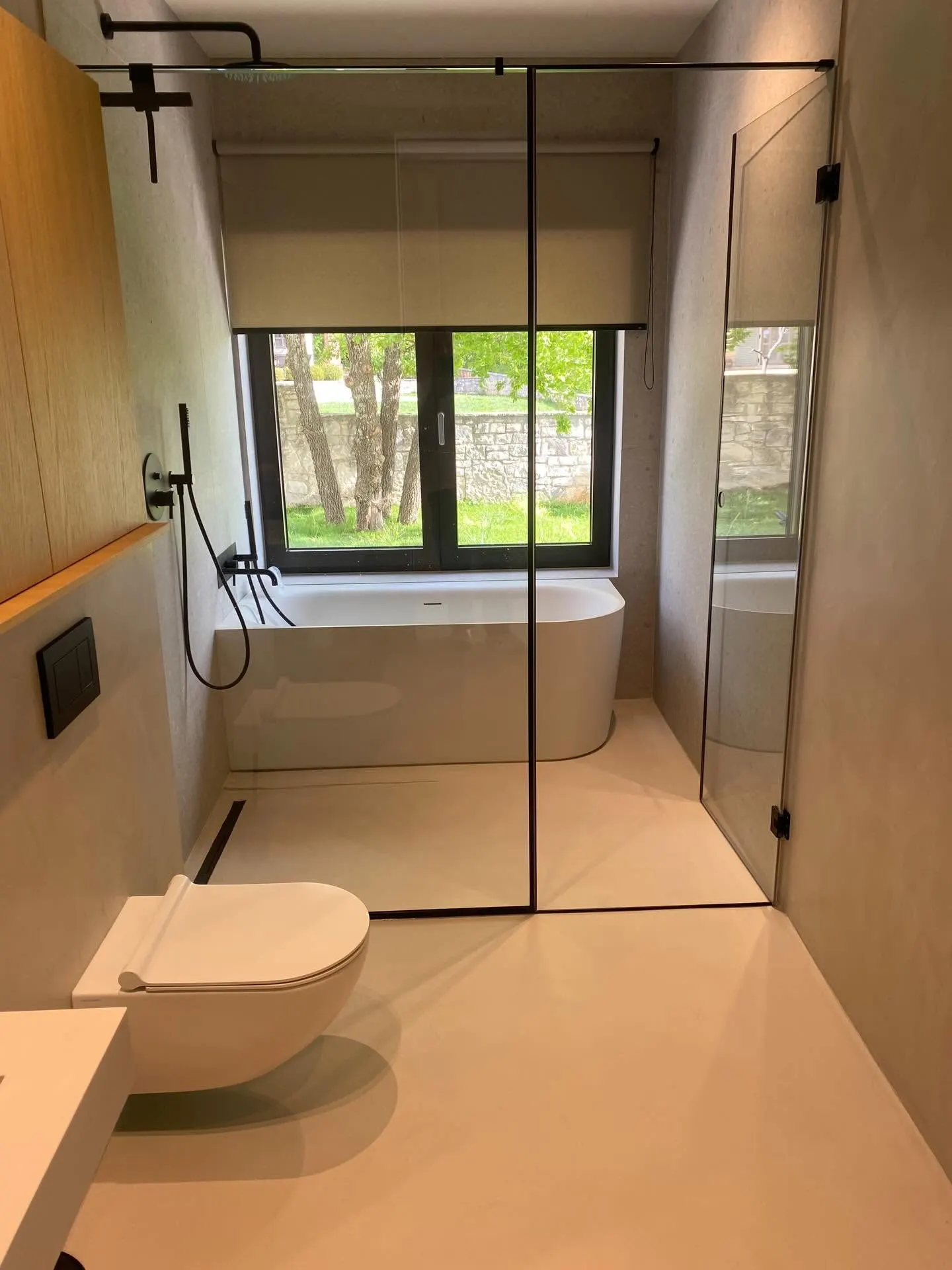 Bathroom with a level walk-in shower, microcement floor and walls
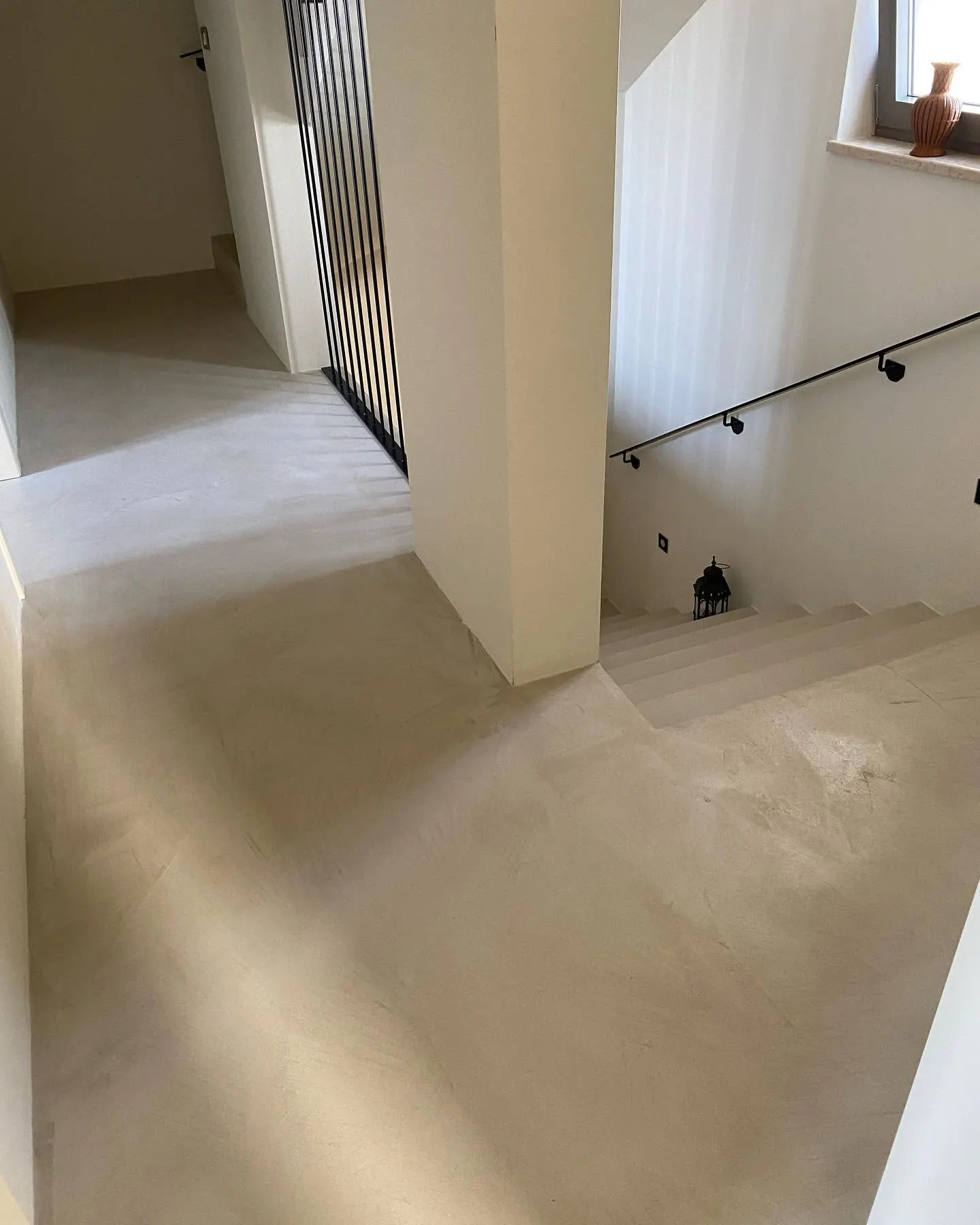 Hallway and staircase in beige microcement
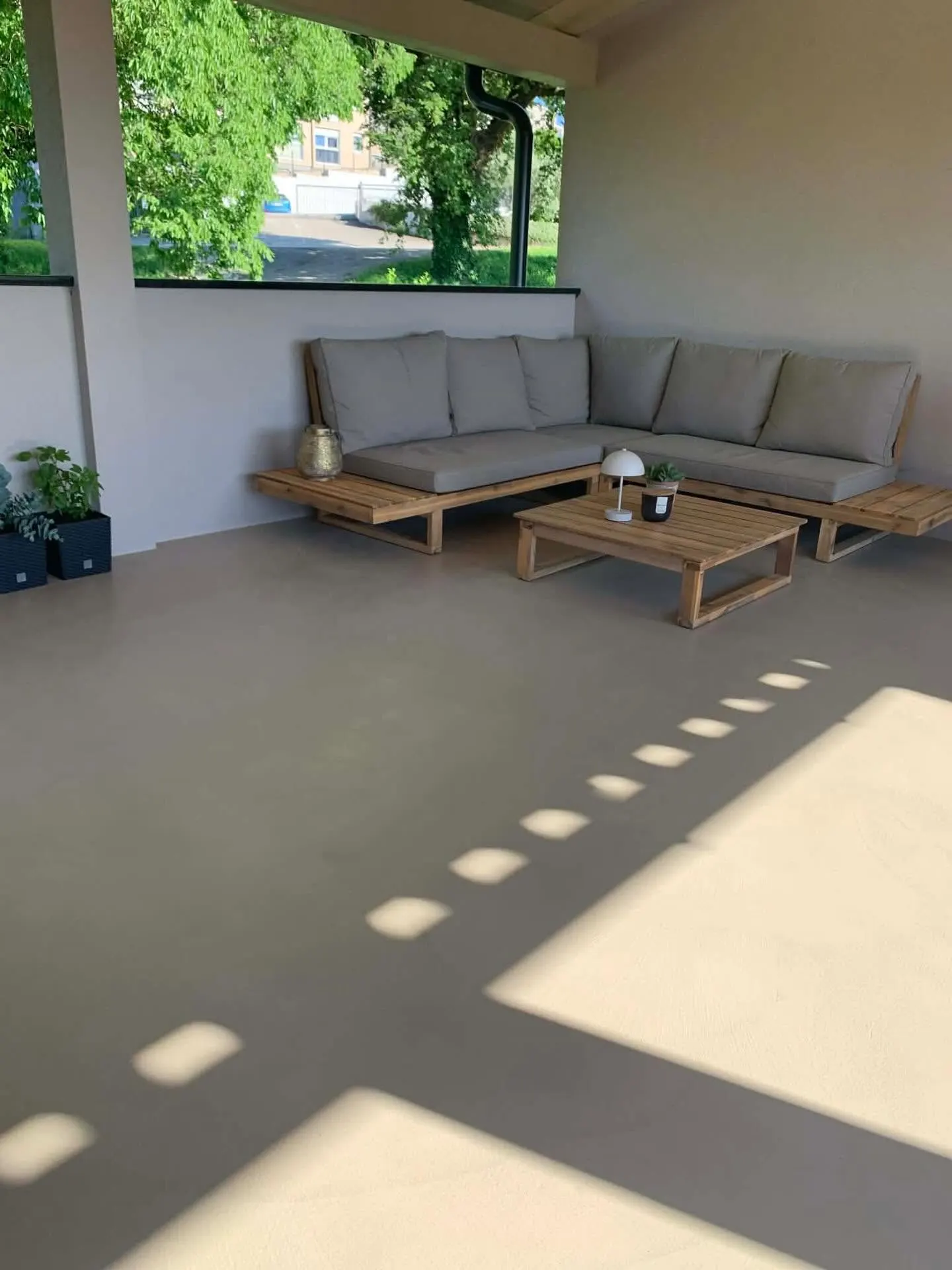 Covered terrace with a seamless floor
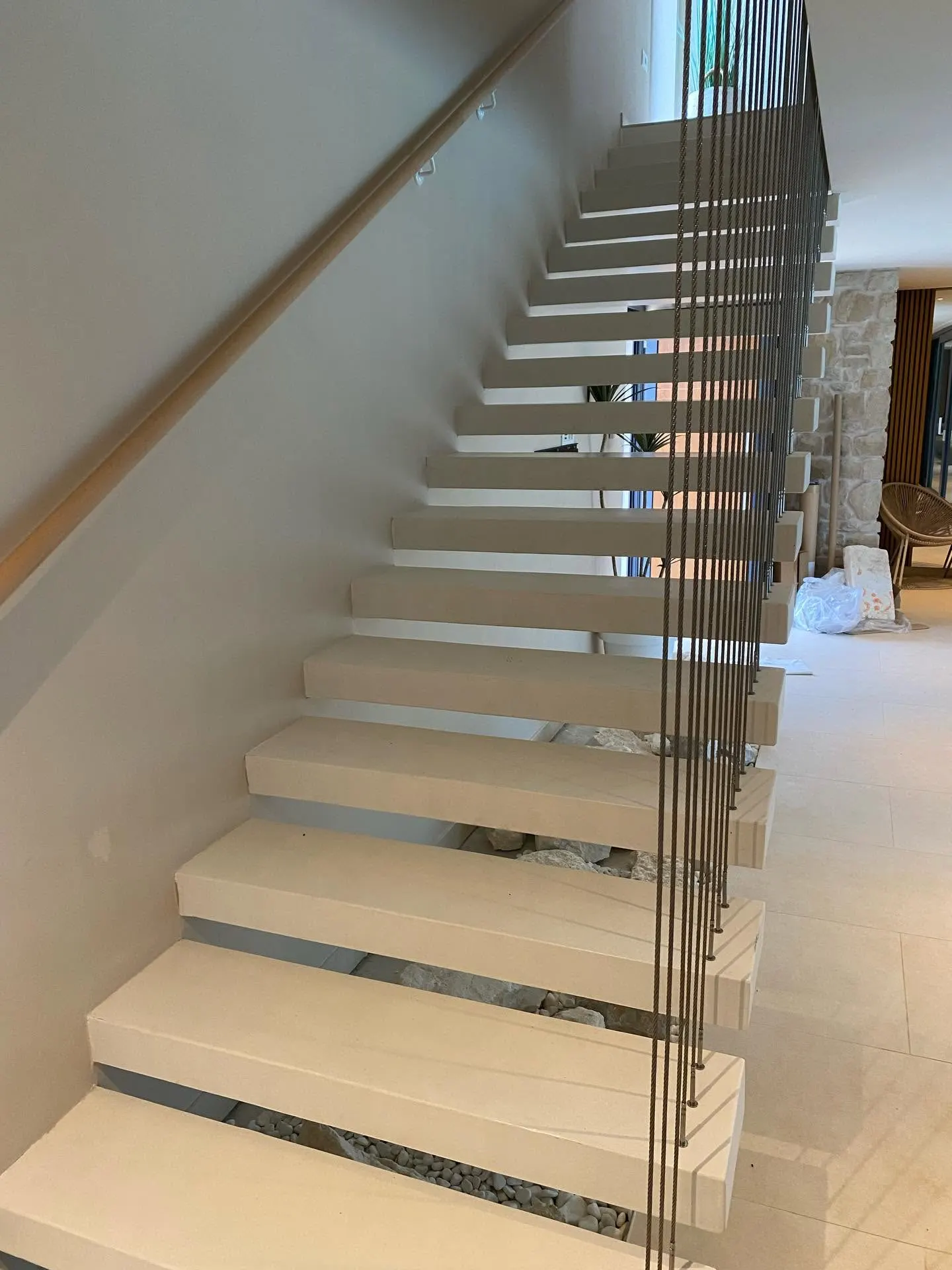 Cantilevered stairs finished in microcement
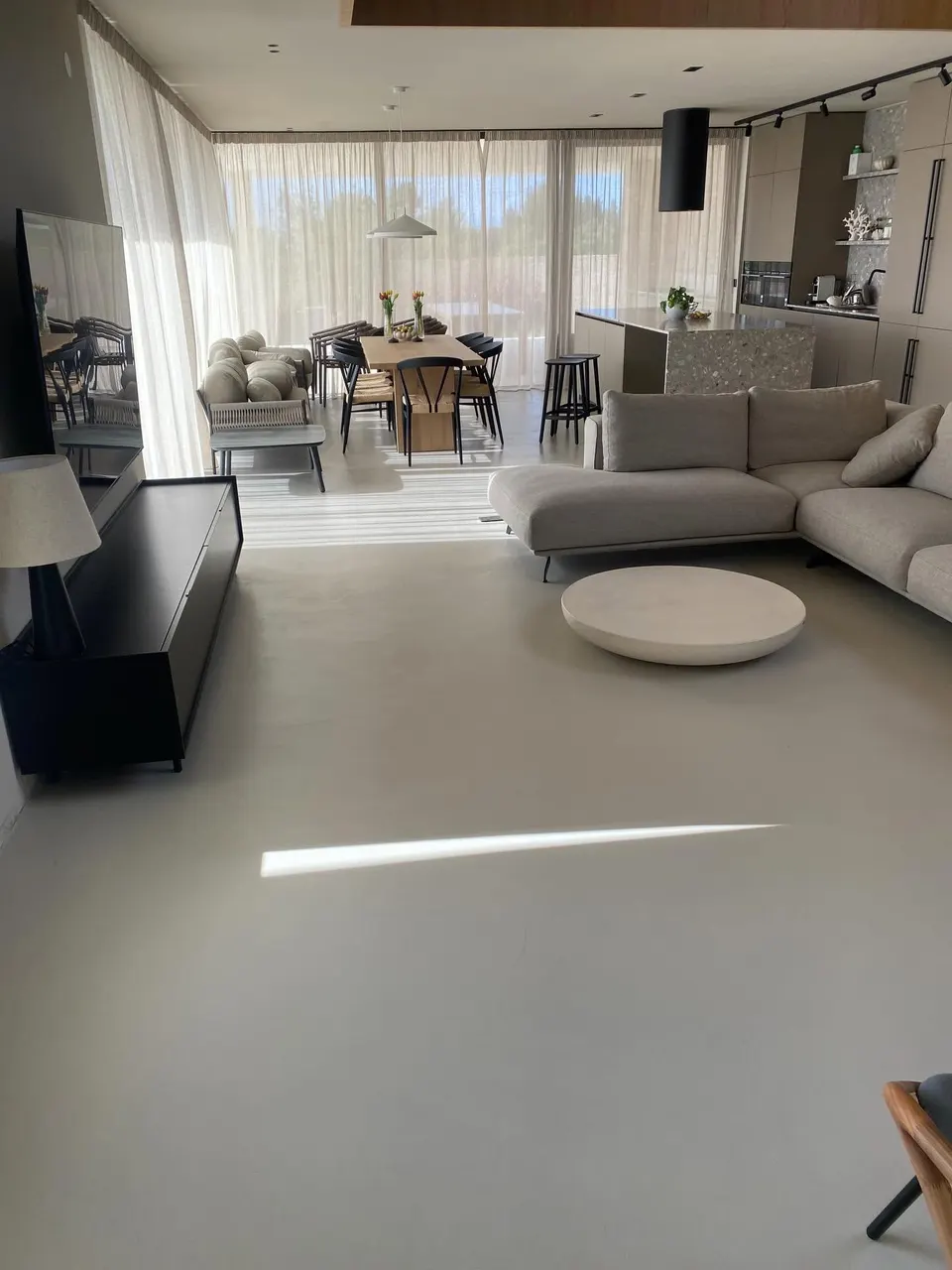
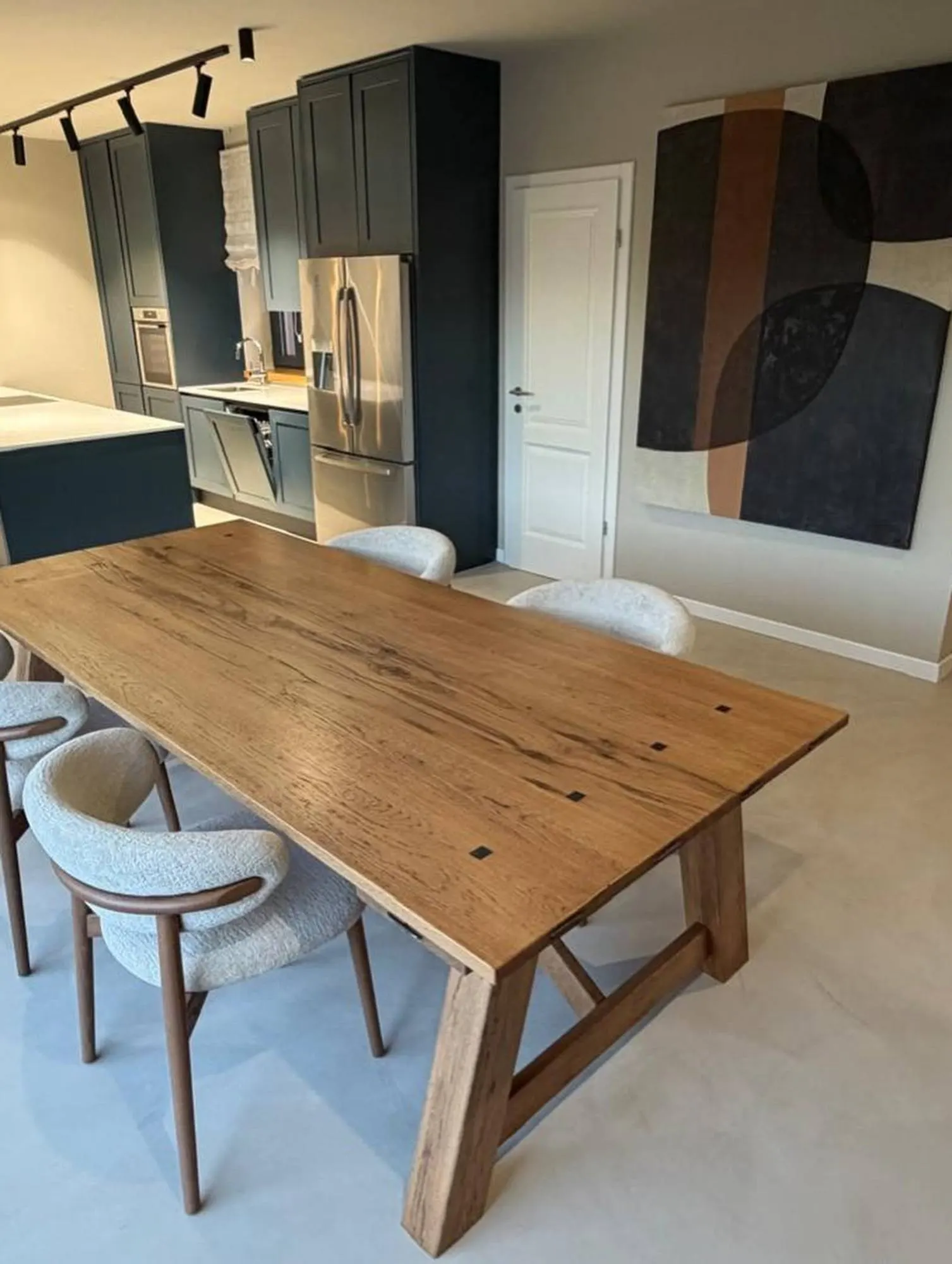 Dining area and kitchen on a light microcement floor
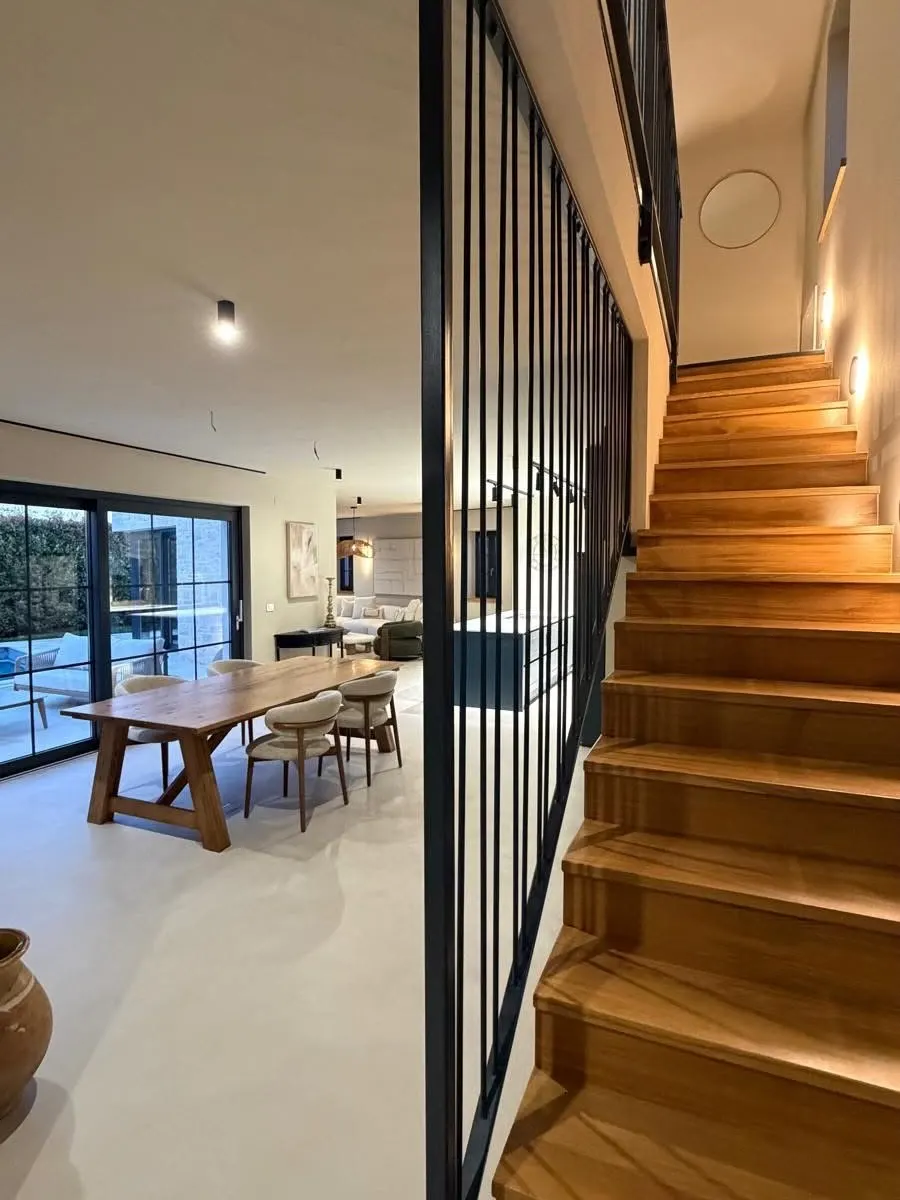 Open-plan space with a microcement floor and timber stairs
Where it works well
- Bathrooms and walk-in showers. Floor, walls, a shower bench and niches in one surface, with a waterproofing layer underneath in the wet zone. A level shower without a tray looks especially clean in microcement. See also the order of work in a bathroom renovation.
- Living areas and kitchens. One floor running through open-plan rooms, without thresholds or transition strips.
- Stairs. Treads and risers coated to match the floor, with careful work on the edges, which take the most wear.
- Covered terraces. A seamless floor that carries the interior outside, using a system made for exterior use. For terraces in full sun and frost, ask which product is used and how it is protected.
- Holiday rentals. No grout to clean between guests, and a fresh look without stripping the whole room.
What decides the result
Most of the quality is decided before the visible layers go on.
- The base. It has to be firm, clean and flat. Loose or hollow-sounding tiles are fixed or removed, cracks are treated and uneven areas levelled.
- Moisture. Damp rising through ground floors, common in old stone houses, can lift any coating. The cause has to be dealt with first; restoring a stone house explains why.
- Primer and mesh. A primer chosen for the base, whether tiles, screed or plasterboard, and a fibreglass mesh in the first layer against cracking.
- Layers and drying time. Base coats and finer finishing coats, each dried and sanded before the next. Rushing this causes most of the problems.
- Sealer. It protects against water, oil and stains, and needs renewing from time to time.
Honest pros and cons
Pros: no grout lines, one continuous look across floors and walls, a thin build-up that rarely means trimming doors, and surfaces that wipe clean quickly.
Cons: it needs a skilled hand, and no two surfaces look exactly alike, which is part of its character. If the base moves, hairline cracks can appear. A smooth finish can be slippery when wet unless an anti-slip finish is chosen, and patch repairs are hard to hide. The other main options, stone, terracotta, oak and tiles, are compared in flooring for Mediterranean homes.
What it costs
As a rough guide, microcement in Istria usually costs about 80 to 160 euros per square metre including VAT. The price depends on the condition of the base, the size of the area, wet zones such as showers, the number of layers and the finish. Small rooms cost more per square metre, because preparation and drying take the same time whatever the size.
Ask for a quote that lists base preparation, waterproofing, the number of coats and the sealer separately. If you already have one, you can run it through our free quote check.
Looking for a microcement contractor in Istria?
Send a few photos of the room and its approximate size on WhatsApp. You will get a rough price range before anyone visits, and the contact of a tradesperson who does this work regularly.