Forget anchors, rope and blue-and-white everything. A real Mediterranean interior is built from light, shade, honest materials and a way of living, and Istria has its own version of it.
Search for "Mediterranean interior" and you will find the same picture a thousand times: whitewashed walls, blue shutters, a ship's wheel above the sofa, a bowl of decorative lemons. It is a postcard, not a house. The interiors people actually remember from the Mediterranean, a cool stone room in July, a long kitchen table under a beamed ceiling, a bedroom with shutters half-closed against the afternoon, have very little decoration in them at all.
What they share is a logic. They are built for heat, bright light and long evenings with people. Get that logic right and the style follows on its own. This guide is about the logic, with an eye on how it looks in Istria, which sits between the Venetian coast and the Central European interior and has borrowed from both.
What makes an interior Mediterranean?
Three things, mostly. First, the climate: thick walls, small or well-shaded openings, hard floors that stay cool, rooms that can be closed in the heat of the day and thrown open at night. Second, the materials: stone, lime, clay, timber, linen and cotton, used plainly and allowed to age. Third, a way of living that moves between inside and out, with the table at the centre of it.
Notice what is missing from that list: a colour scheme, a motif, a souvenir. Those come last, if at all.
The clichés to avoid
- Nautical decoration. Anchors, rope knots, life rings and framed boats belong on boats. In a house they read as a theme park.
- Greek-island blue and white everywhere. It is a real palette, but from somewhere else. Istria is warmer: stone, ochre, olive and terracotta.
- Fake distressing. Chipped paint applied in a factory never ages the way real use does. Buy things that will age well instead.
- Too many patterned tiles. One good tiled floor or splashback is memorable. Five patterns in one room is noise.
- Furniture as decoration. A carved "rustic" chest nobody opens is clutter. Everything should earn its place.
Start with walls, floors and ceilings
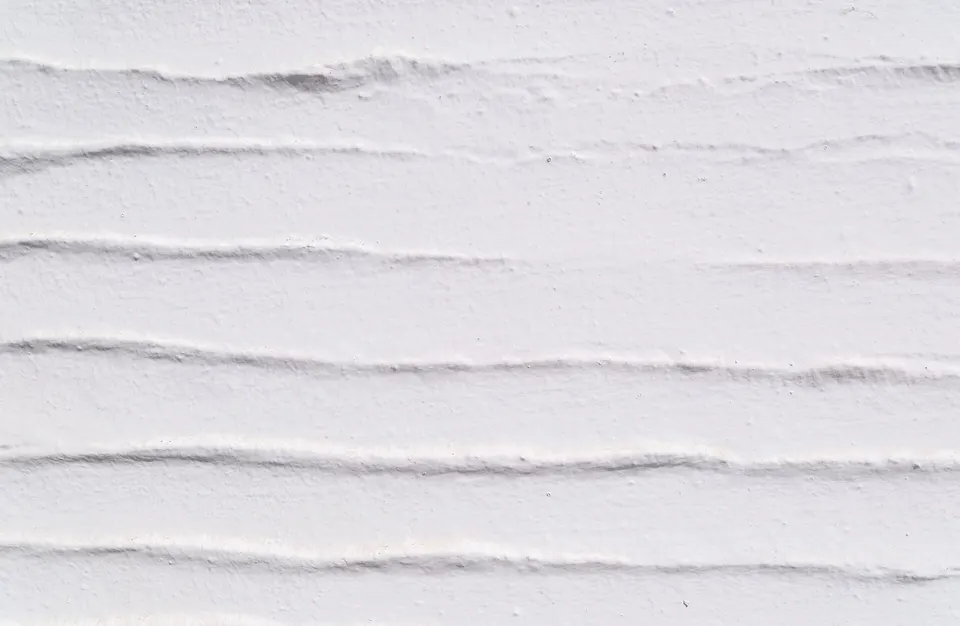
In a Mediterranean room, the envelope does most of the work. Walls are textured rather than flat: lime plaster, exposed stone or a mineral paint with a soft, chalky finish. They catch light differently through the day and hide the small marks that a summer house collects. If you are working with an old stone house, our piece on lime plaster and breathable walls explains why the wall finish matters for more than looks.
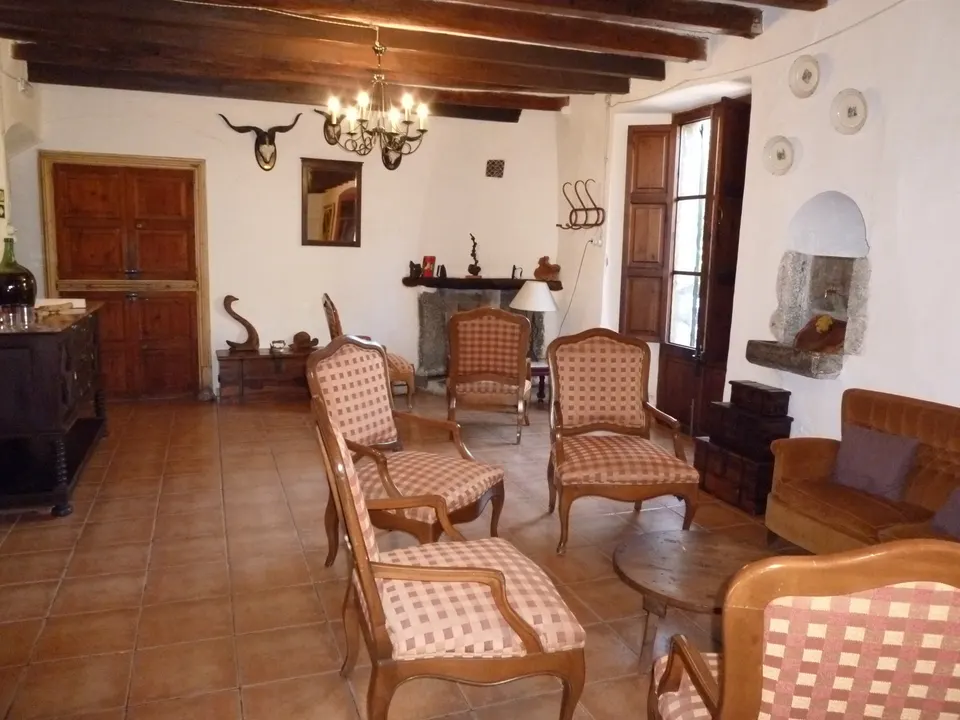
Floors are hard and cool: stone, terracotta or a good ceramic in a natural tone. Timber works too, especially upstairs, as long as it is matt and robust enough for sand and wet feet. Ceilings, where the house allows it, show their structure. Exposed timber beams are a feature of many Istrian houses and give a room scale and warmth without a single object added.
Furniture: fewer pieces, better made
Mediterranean rooms are rarely full. A long table, a deep sofa, a bench by the door, a bed and a chair in the bedroom. Because there are fewer pieces, each one is seen, used and touched more. That is the case for buying less and buying better.
Proportion matters more than ornament. Low, solid shapes sit well against thick walls. Natural fibres, such as cane, rattan, rush and linen, add texture and breathe in the heat. Built-in furniture, the niche shelving and window seats and fitted wardrobes that old houses are full of, keeps rooms calm because storage disappears into the walls.
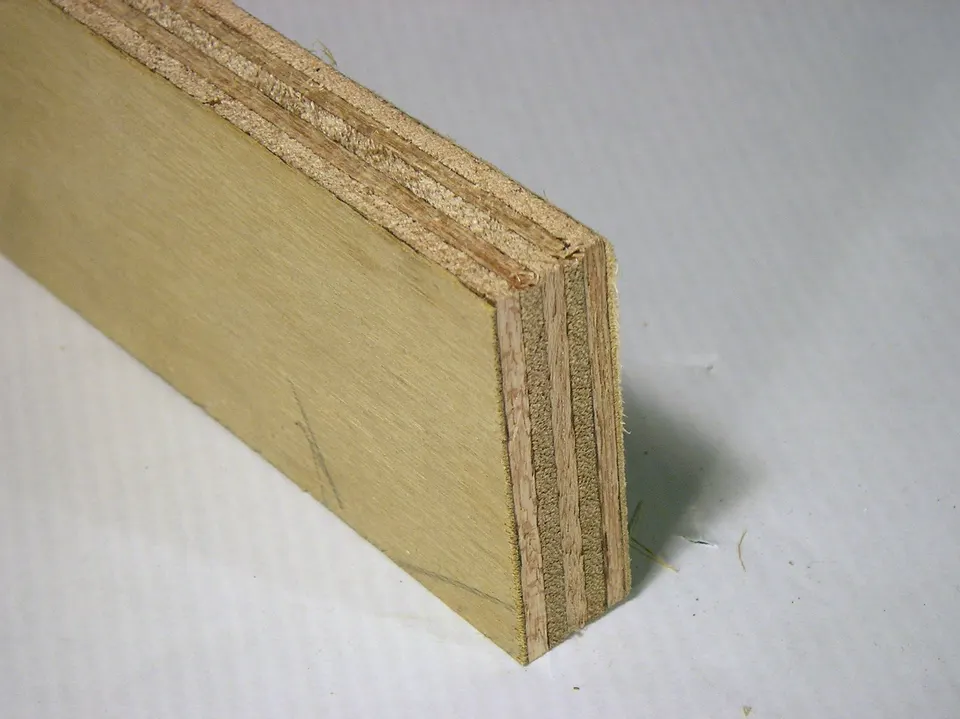
The board inside the furniture matters here more than in a city flat. Humidity rises and falls with the seasons, and holiday houses are often closed for months. Lampisa, the Istrian atelier we work with, builds its furniture in plywood rather than particleboard for exactly that reason: cross-laminated layers keep their shape and hold their screws through humid summers and closed winters. If you want to know why, read plywood or particleboard.
A Mediterranean room is not decorated. It is furnished, shaded and lived in.
Colour: take it from outside the window
The safest Mediterranean palette is the one you can see from the house. In Istria that means warm whites and the pale grey of local limestone, the red of the iron-rich soil, the silver green of olive leaves, and the deep blue of the sea in the distance rather than in the paint. Use the pale tones on large surfaces and keep stronger colour for textiles, ceramics and the odd painted door. We go further in colour palettes taken from the Istrian landscape.
Light and shade
Mediterranean interiors are as much about keeping light out as letting it in. External shutters, deep reveals, pergolas and linen curtains turn hard midday sun into something soft. Inside, matt surfaces diffuse light, while glossy ones create glare. Our longer piece on designing with Istrian light covers orientation and shading in detail.
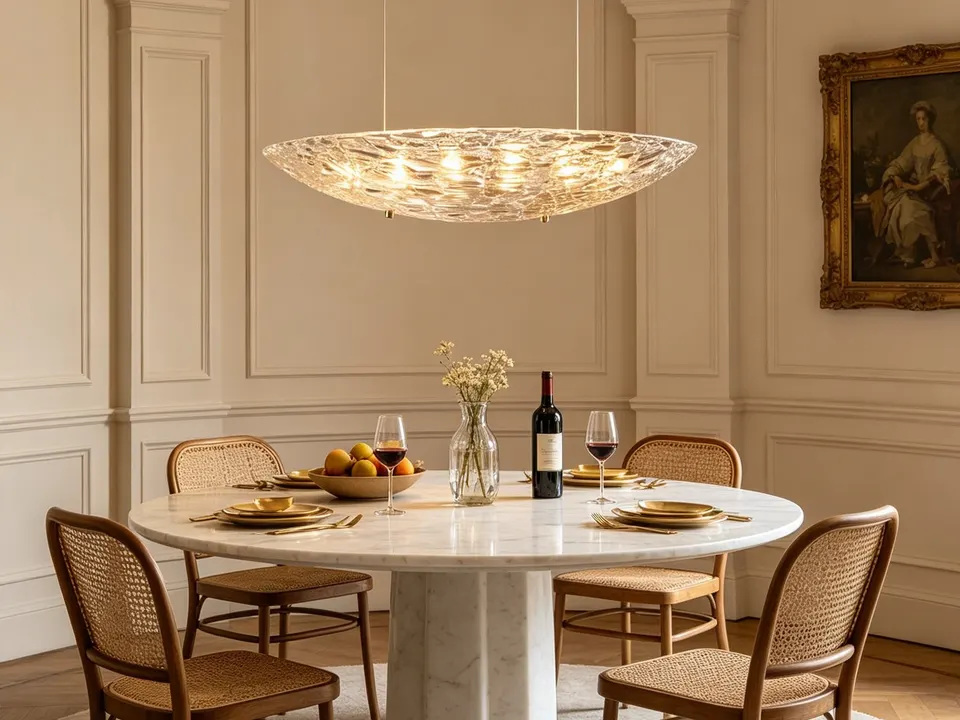
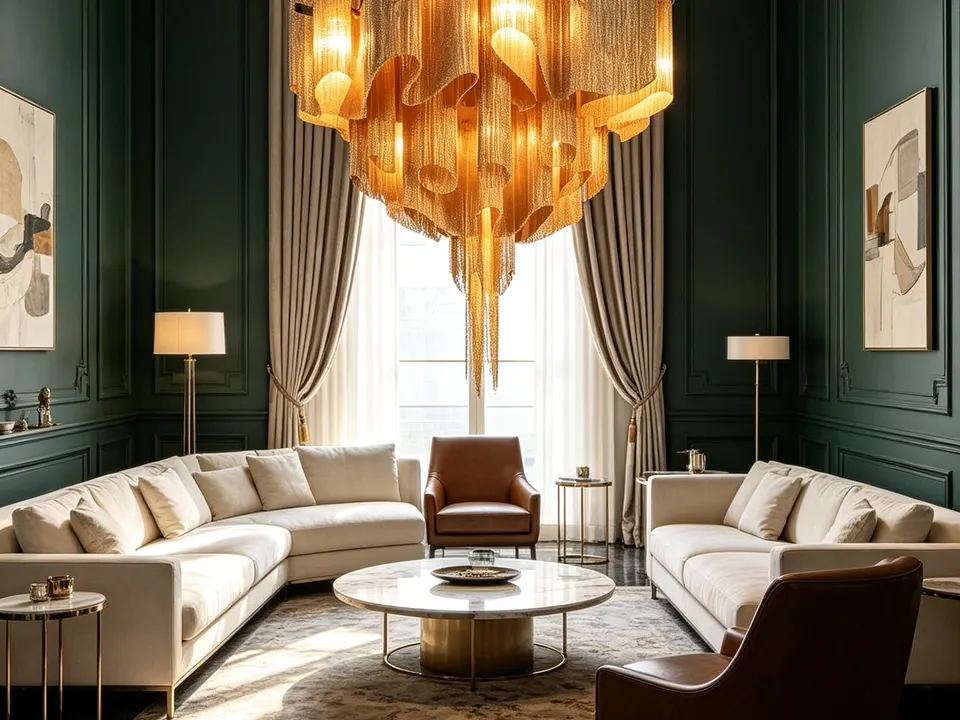
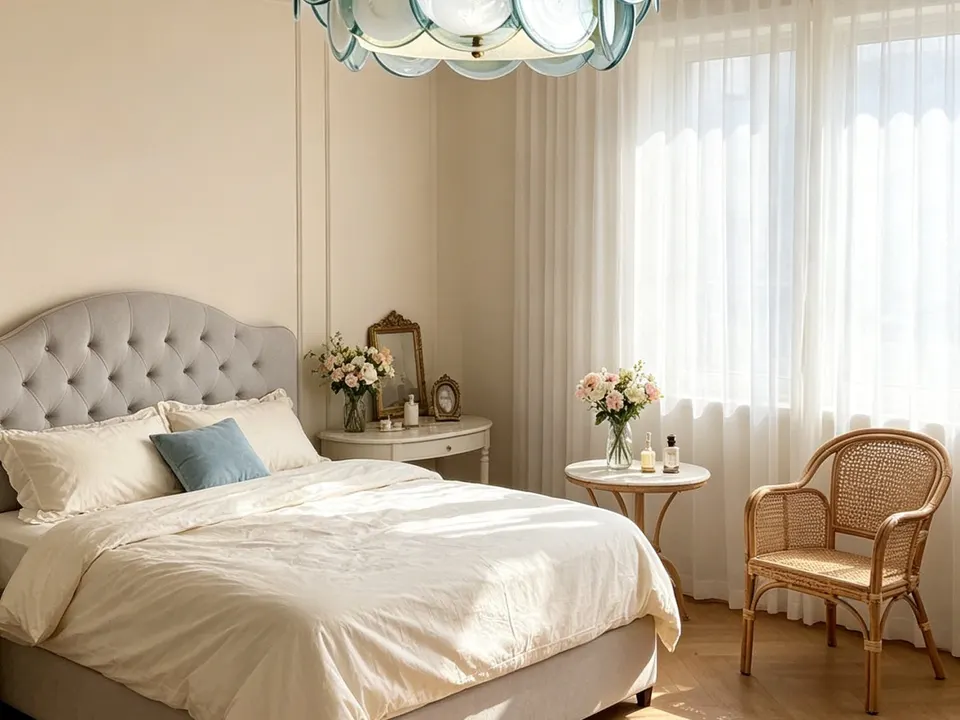
In the evening the mood changes. Warm, low light, a lamp at seating height, a pendant over the table, wall lights grazing stone, feels right in a house built of stone and lime. A single statement piece of glass, such as a Murano chandelier over the dining table, can carry a room the way a painting does. Lampisa's lighting collections, including Murano glass, are in its online catalogue.
The Istrian accent
Istria adds a few things of its own. The Venetian centuries left arched openings, stone window frames and loggias in the coastal towns. Inland farmhouses have the komin, the open hearth around which the family once cooked and gathered, and many restored houses keep it as the heart of the living room. Dry-stone walls, olive groves and vineyards frame the views. You do not need to copy any of this, but a house that acknowledges it, a stone threshold kept, a hearth restored, a window placed on the olive grove, feels like it belongs.
A short checklist
- Envelope first. Decide walls, floors and ceilings before any furniture.
- Natural materials, plainly used. Stone, lime, clay, timber, linen, cane.
- Fewer, better pieces. A big table matters more than a dozen accessories.
- Built-in storage. Let wardrobes and shelves disappear into niches.
- A palette from the landscape. Pale on walls, colour in textiles and objects.
- Shade outside, warm light inside. Shutters by day, lamps and glass by night.
- Something local. A hearth, a stone sill, a view kept open.
If you have a moodboard full of rooms you love but are not sure how they translate to your own house, that is exactly what the moodboard to render service is for: you bring the pictures, the atelier draws your room in 3D with furniture made for it, and nothing is built until you approve it.