A children's room in a holiday home sleeps different families every week. It has to be safe for a toddler, fun for a ten-year-old and tough enough for both.
In a family home, a child's room grows with one child. In a holiday villa, it is used by a different family every week: a toddler who climbs everything, two cousins who want to share, a teenager who needs a socket by the bed and a door that shuts. The room has to be ready for all of them, and still look good in the listing photographs at the end of August.
That sounds like a lot to ask of a few square metres. In practice, it comes down to four things: how many children the room sleeps, how safe it is, where everything goes, and what the furniture is made of.
How many beds, and which kind?
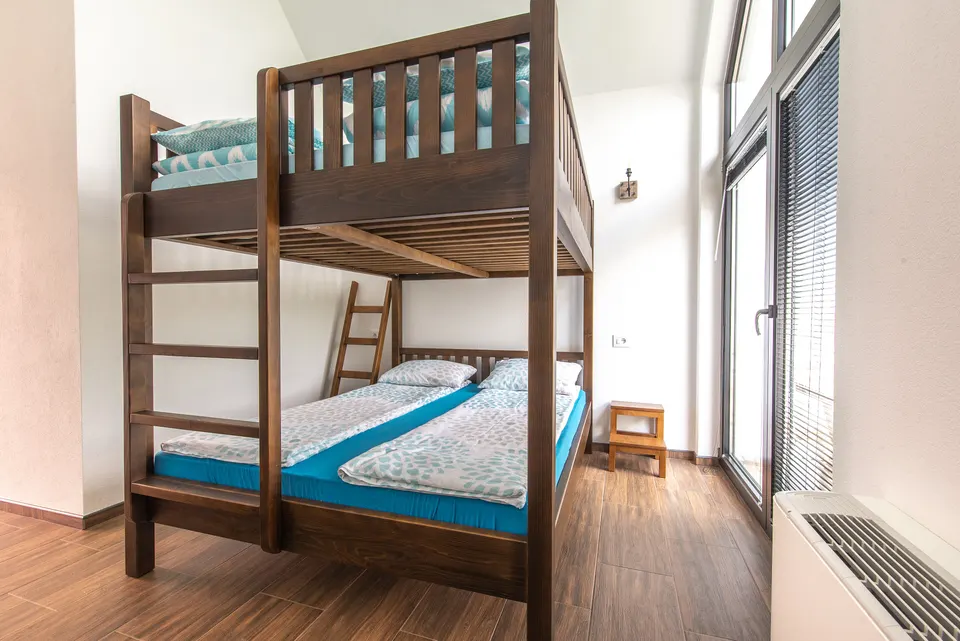
Start with the people, not the furniture. Most villas let to families need a room that can sleep two or three children comfortably, and sometimes a parent who wants to stay with a small child on the first night. A pair of single beds is the most flexible answer for younger children. A bunk bed doubles the sleeping space without taking more floor, and children usually love it.
Look for a bunk with a full-length guard rail on the upper bed, a ladder that is fixed rather than hooked on, and rungs wide enough for a bare foot. Most safety advice says that the top bunk is not for very young children, so a villa with bunks should also have a low bed or a cot for the smallest guests. A trundle bed that slides out from under a single is a neat solution for the occasional third child.
Mattresses matter more than the frame. Choose a size that fits the frame exactly, with no gap at the edges, and protect every one with a washable, breathable cover. In a rental, a good mattress protector is not a detail; it is what keeps the room in service.
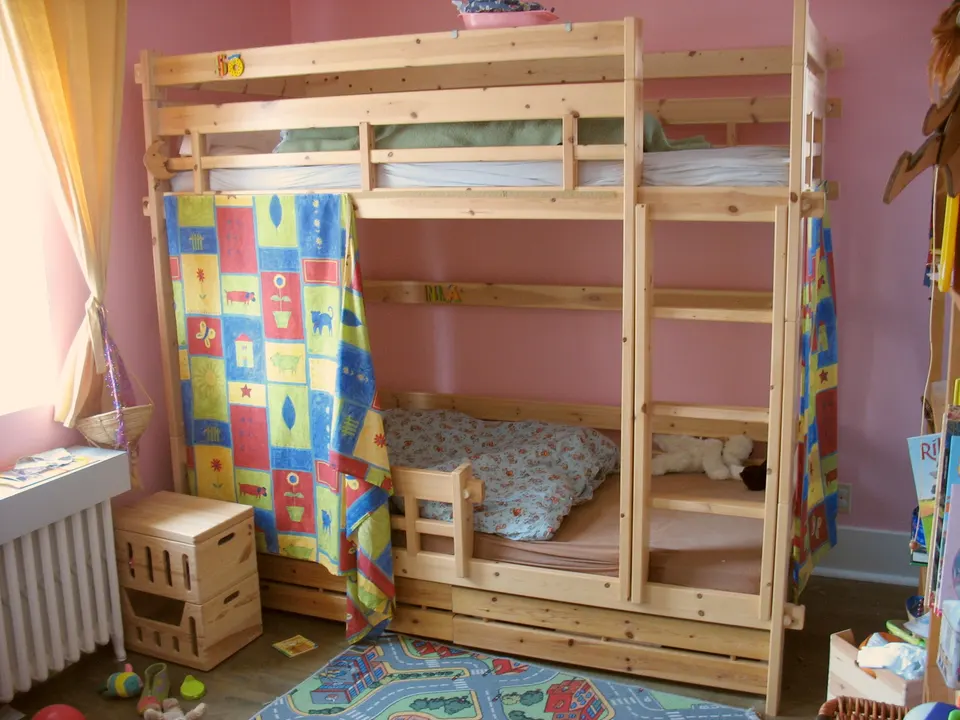
What makes a children's room safe?
Safety in a holiday home is different from safety at home, because the children do not know the house. They have not learned which drawer sticks or which window opens wide. The room has to be safe on the first evening.
- Fix tall furniture to the wall. Wardrobes, bookcases and chests of drawers should be anchored, because children climb open drawers like stairs.
- Control the windows. Restrictors on opening windows, and no bed or chest placed directly beneath one.
- Round the corners. Rounded edges on tables, bed frames and shelves at head height of a small child.
- Cover the sockets that are within reach, and keep cables and blind cords out of the way.
- Light the way at night. A soft night light, and a switch a child can reach from the door.
- Soft-close, not slam. Hinges and drawer runners that close gently save small fingers.
None of this needs to look clinical. Most of it is invisible once it is done, and the parents who stay will notice it all the same. Our wider guide to a family-friendly holiday home covers the rest of the house, from the pool to the beach gear.
Where does everything go?
Children arrive with more than adults expect: inflatables, buckets, books, a favourite blanket, a tablet and its charger. If there is nowhere to put it, it ends up on the floor. Plan storage at two heights. Low, open shelves and drawers for the things children use themselves, so they can tidy up without help. Higher cupboards for spare bedding, the cot linen and whatever the owners want to keep out of reach.
Drawers under the bunk or the beds use space that is otherwise wasted. A row of hooks at child height by the door takes swimming bags and hats. A small table and two chairs give a place to draw on a hot afternoon, and something to do on a rainy day.
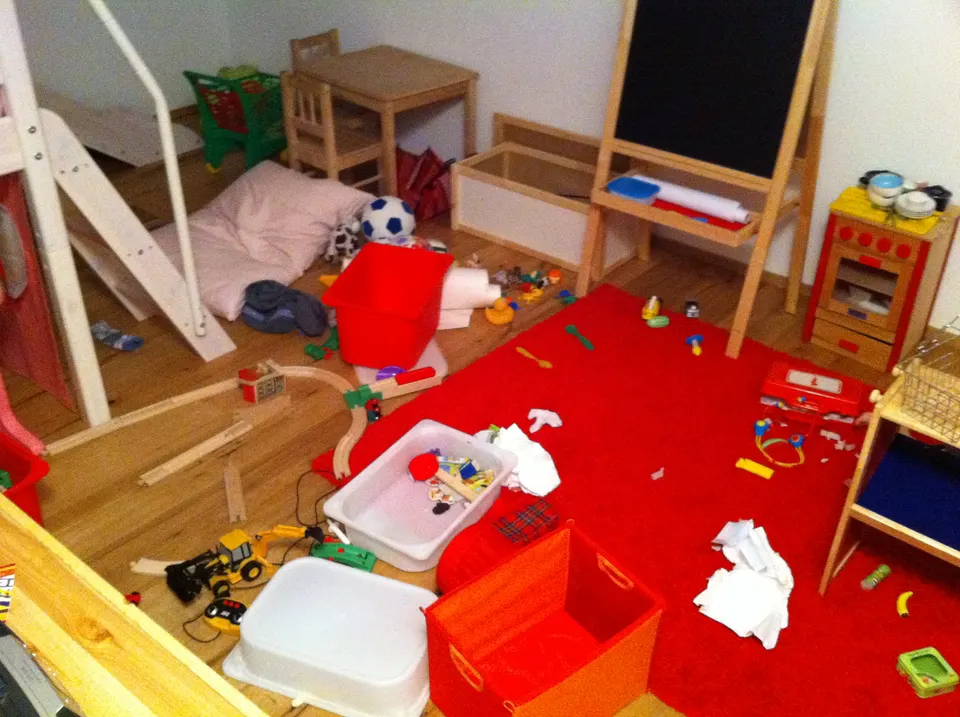
A children's room in a villa is used by a new family every week. It has to be safe on the first evening, not after a week of learning the house.
Which materials survive a season of families?
Children are the hardest test any furniture will face. Beds are climbed, drawers are stood on, wardrobes are used as goals. In a coastal house, add damp towels, sandy feet and a room that may be closed for months over the winter.
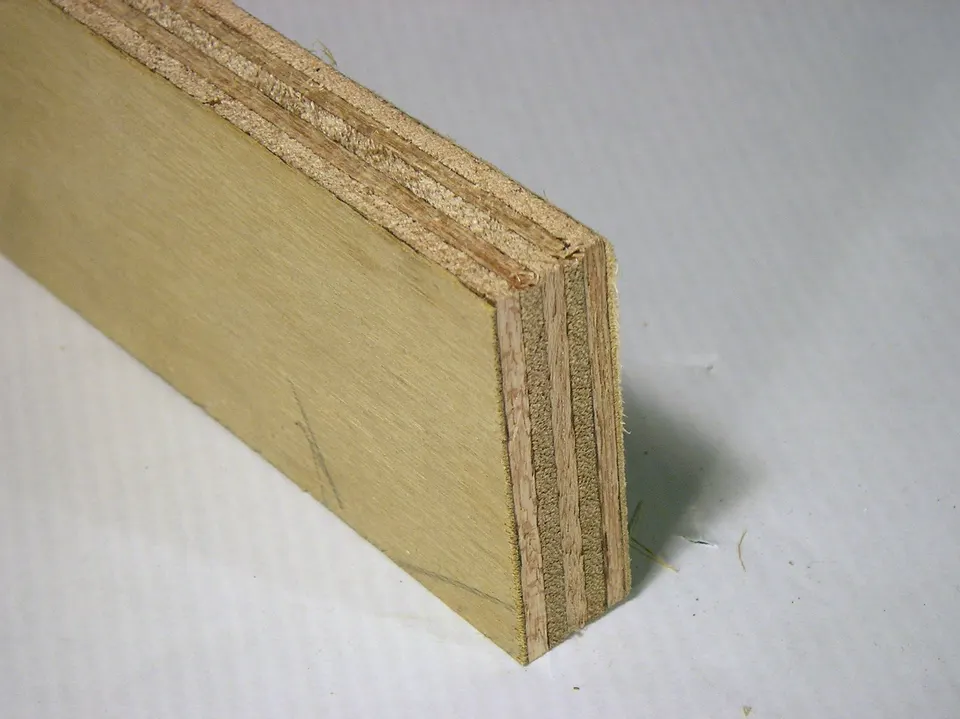
This is where the board inside the furniture matters most. Particleboard swells when water reaches an edge or a screw hole, and screws lose their grip once they have been loosened and tightened a few times. Plywood is built from layers of real wood veneer glued with the grain crossing, so it keeps its shape, holds screws and fittings better, and can be repaired rather than thrown away. Our partner atelier, Lampisa, builds its furniture in plywood, never particleboard, and that matters more in a child's room than anywhere else in the house. For the full comparison, see plywood or particleboard.
Choose finishes that can be wiped clean: a hard-wearing lacquer or oil on wood, washable paint on walls, and fabrics that come off for the wash. Avoid glass at child height, and very dark matt surfaces that show every handprint.
How do you make it fun without making it childish?
A themed room looks great to a five-year-old and embarrassing to a twelve-year-old. In a holiday home, the guests change age every week, so the room works better with a calm base and a few playful details. A colour on one wall or on the bunk ladder. A curtain that turns the lower bunk into a den. A pinboard for drawings, a map of Istria to mark the beaches the family has found, a reading light on each bed.
Keep the palette close to the rest of the house, so the room still belongs to the villa in the photographs. Natural wood, white walls, a soft blue or terracotta: the colours of Istria work for children as well as adults.
Checklist: a kids' room ready for guests
- Beds for the ages you expect, including a low bed or cot for the youngest.
- Full guard rail and fixed ladder on any bunk; mattresses that fit the frame exactly.
- Tall furniture anchored to the wall; window restrictors; socket covers.
- Storage at child height, and a higher cupboard for spare linen.
- Hooks for swimming bags and hats by the door.
- Washable covers, wipeable finishes, no glass at child height.
- A night light and a reading light on every bed.
- Furniture built in plywood, with edges sealed against damp.
Made for the room, not for a catalogue
Many children's rooms in Istrian houses are awkward: a sloping ceiling under the roof, a deep window in a stone wall, a corner that no standard bunk will fit. Furniture made to measure can turn those quirks into the best part of the room, such as a bed built into the eaves or a window seat with drawers below. With Lampisa's from moodboard to render service, you bring photos and a few ideas, the atelier prepares a 3D render of the room and its furniture, and only after you approve it does the making begin.