Film under Roman arches, music in a hilltop town, truffles, young wine and village feasts. A guide to the long-running festivals that shape the Istrian year.
Istria is not a place of giant stadium festivals. Its best events are smaller, older and more particular: films projected inside a Roman amphitheatre, young musicians practising in the lanes of a hilltop town, a whole village gathered around a pan of eggs and truffles. Many have been running for decades, and they are often the best excuse to see a town at its liveliest. This guide covers the well-established ones, the festivals that return year after year and are worth building a trip around.
Exact dates and programmes change from year to year, so treat this as a map of the seasons rather than a calendar. Before you book, check the official festival website or the local tourist board.
Which film festivals are held in Istria?
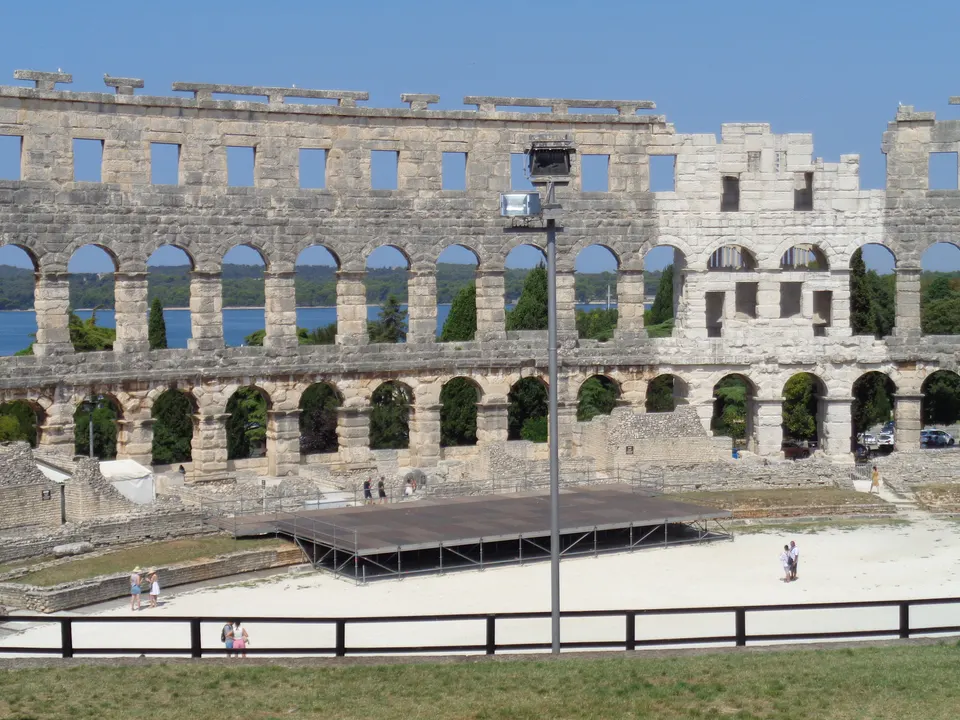
Two, and they could hardly be more different. The Pula Film Festival is the oldest film festival in Croatia, running since the 1950s, and its heart is the Arena, Pula's Roman amphitheatre. Watching a film under the open sky, seated on stone where audiences sat two thousand years ago, is one of those experiences that stays with you. The festival takes place in high summer and focuses on Croatian and European cinema, with screenings spread across the city as well.
The Motovun Film Festival, founded at the end of the 1990s, turns a tiny medieval hill town into a crowded, cheerful village of cinema-goers for a few days each summer. Films are shown on the main square and in improvised venues inside the walls, and the programme leans towards independent and international work. Accommodation in Motovun itself is very limited, so many visitors stay in the valley or in nearby towns and come up for the evening. If you want the town without the festival, read our slow weekend in Motovun.
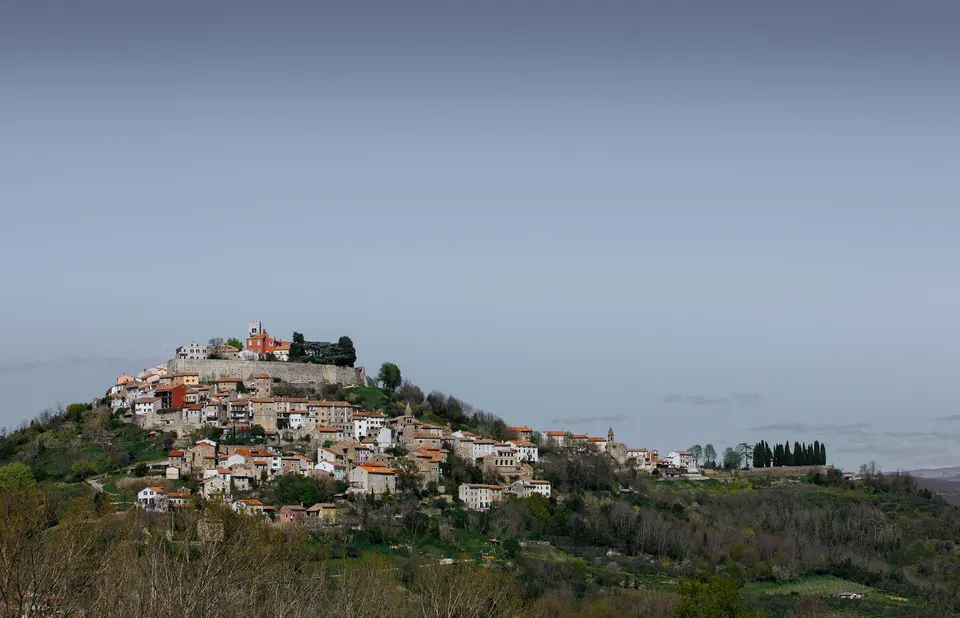
Music in Grožnjan
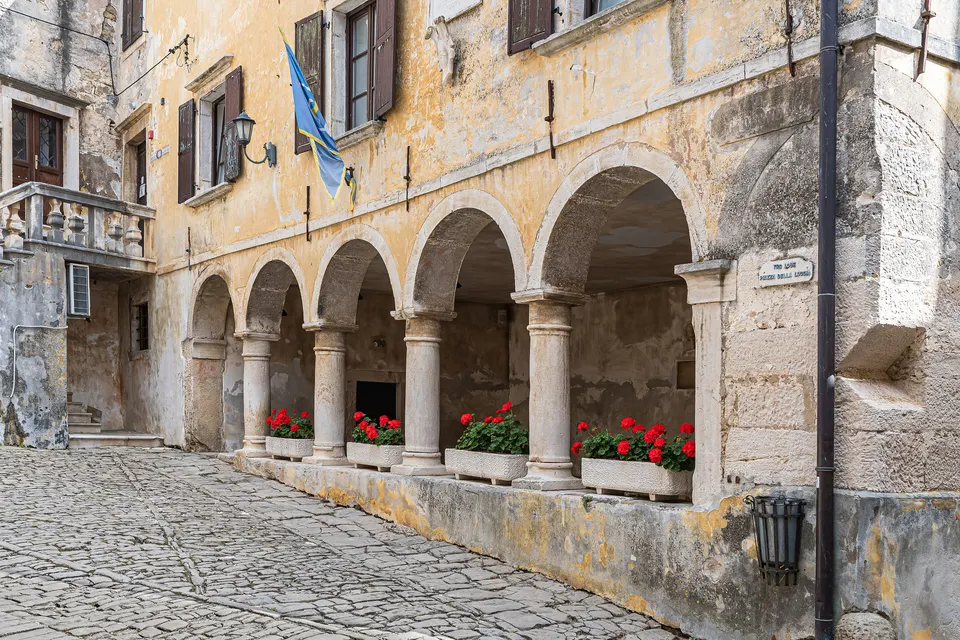
Grožnjan, a small stone town on a ridge above the Mirna valley, has been home for decades to the international cultural centre of Jeunesses Musicales Croatia. Every summer, music students and teachers arrive for courses and workshops, and the town fills with the sound of rehearsals drifting from open windows. Concerts are held in the church, the squares and the loggia, and jazz has its own place in the summer programme.
What makes Grožnjan special is the scale. You can hear a concert in a space that holds a few dozen people, then walk out into lanes lined with galleries and studios. Between concerts, the views over the Mirna valley are reason enough to linger.
Istria's best festivals are smaller, older and more particular than the big summer events elsewhere.
Art in the streets of Rovinj
In Rovinj, Grisia, the steep cobbled street that climbs to the church of St Euphemia, is lined with artists' studios and galleries all year. Once a summer it becomes a long open-air exhibition, a tradition that goes back to the 1960s, when painters, amateurs and professionals alike, hang their work on the old stone walls along the whole street. It is informal, crowded and generous in spirit, and a good reason to be in Rovinj on that day.
Food festivals: truffles, asparagus and olive oil
Istria celebrates its harvests, and many of the most enjoyable events are about food. In spring, when wild asparagus appears along the dry-stone walls, villages hold asparagus days and the classic dish is a fritaja, a simple omelette with the bitter green shoots.
Autumn belongs to the truffle. In Buzet, the self-styled town of truffles, the Subotina marks the start of the white truffle season with a giant truffle omelette cooked in an enormous pan on the main square and shared among the crowd. Through the autumn, Livade and the other villages of the Mirna valley host truffle fairs and tastings. Our guide to truffle season in Istria explains what to look for.
Late autumn and early winter bring the new olive oil. Local fairs and open days at mills let you taste the fresh, peppery oil straight from the press, often with bread and a glass of wine.
Wine events and St Martin's Day
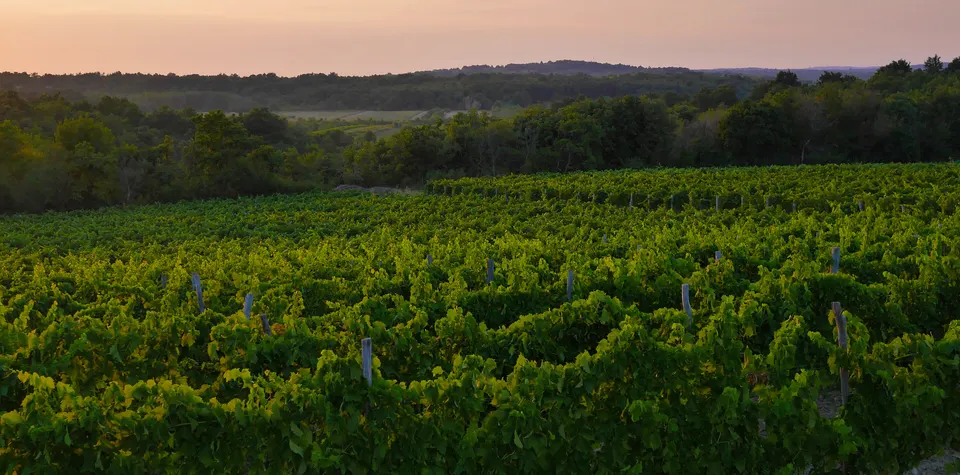
Istrian wine has its own calendar. In spring, the long-running Vinistra wine fair in Poreč brings together winemakers from across the peninsula, and is a chance to taste Malvazija and Teran side by side. Many wineries also open their doors on special weekends in spring and autumn.
On St Martin's Day, in November, the young wine is traditionally blessed and opened, and towns and villages celebrate with food and music. It is a lovely time to visit inland Istria: the crowds have gone, the forests are turning, and the konobas are warm. Our guide to Malvazija, Teran and the wines of Istria is good reading before you go.
Carnival and village feasts
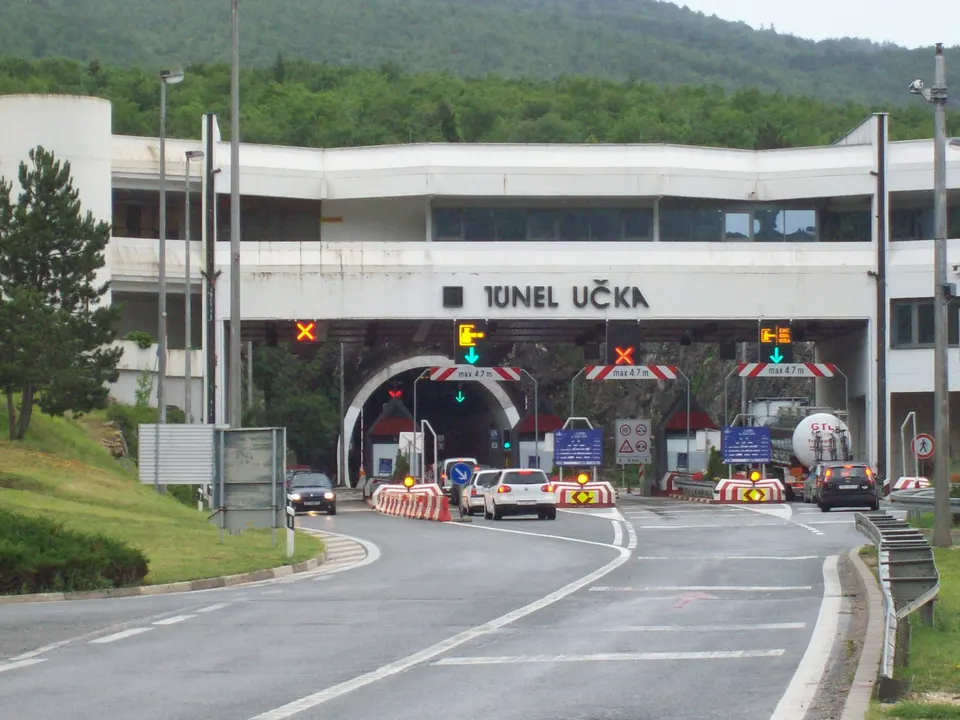
Carnival, known locally as pust, is still celebrated in many Istrian towns and villages in late winter, with masks, processions and the symbolic trial and burning of a straw figure who takes the blame for the past year's troubles. Nearby, across Učka, the Rijeka Carnival is one of the largest in this part of Europe.
Through the summer, almost every village has its own fešta, usually on the feast day of its patron saint: a mass, a procession, then long tables, grilled meat, local wine, an accordion or a band, and dancing into the night. These are not tourist events, but visitors are welcome, and they are often the most memorable evenings of a holiday.
Good to know
- Check the official sources. Dates, venues and programmes change every year; confirm them on the festival website or with the local tourist board before you book.
- Book a bed early. Small towns such as Motovun and Grožnjan have very few rooms, and they go quickly during festivals.
- Plan the evening trip. Hill towns are reached by narrow roads with limited parking; arrive early or arrange a lift.
- Bring a layer. Summer evenings in inland Istria can be cooler than on the coast, especially on a hilltop after midnight.
- Go outside July and August. Spring and autumn food and wine events show a quieter, more local Istria.
Choosing your season
If you love cinema and long warm nights, come in July and early August for Pula and Motovun. If music matters more, Grožnjan in summer is hard to beat. For food lovers, spring and autumn are the richest seasons, with asparagus, truffles, new olive oil and young wine. And whatever the month, ask where the nearest village feast is. Someone will know, and you will probably end up at a long table with people you have never met.