Salt, sun and the bora are hard on windows. How to choose frames, glass, shutters and fittings for a house on the Istrian coast, and what to ask before you order.
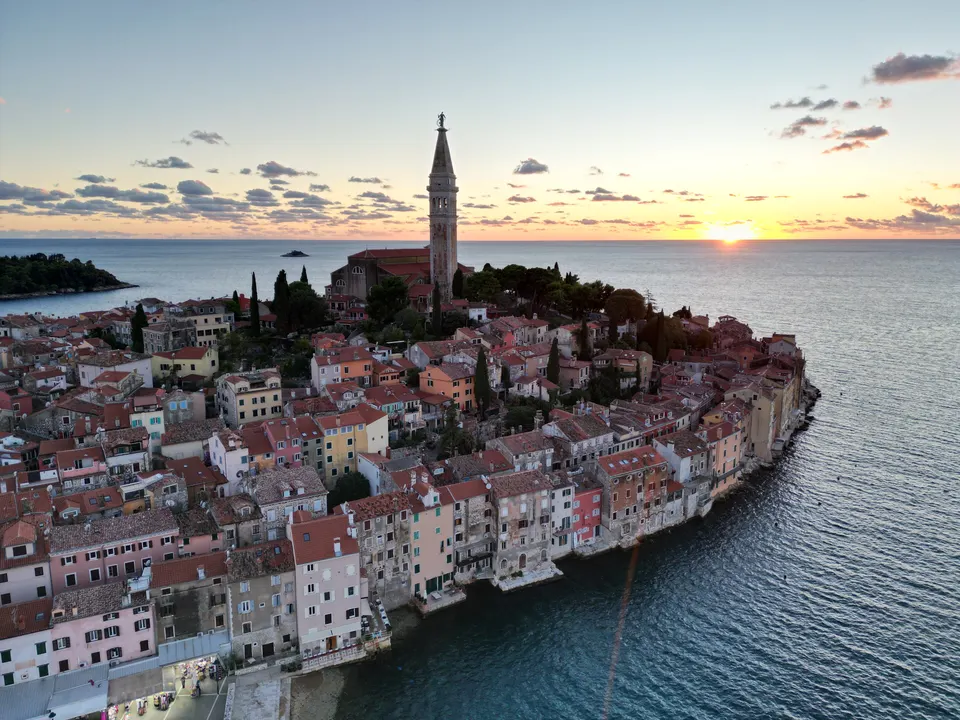
Windows are where a house meets the weather. On the Istrian coast that weather includes strong summer sun, salt carried on the wind, sudden autumn storms and the cold, gusty bora in winter. A window that would last decades in a city flat can be stiff, stained and draughty after a few seasons by the sea.
They are also one of the hardest things to change later. Replacing windows means scaffolding, plaster repairs and disruption to every room. It is worth getting the choice right the first time.
Why do coastal windows age faster?
Three things work on a window by the sea. Salt settles on every surface as a fine film, attracts moisture and attacks metal: hinges, handles, screws and poorly protected aluminium. UV light breaks down paints, seals and plastics, so finishes fade and gaskets harden. Wind pushes rain into joints and puts load on large panes and sliding doors. Add the swing between humid summers and closed-up winters in a holiday home, and every weakness in the material or the installation will show.
Timber, aluminium, PVC or a combination?
There is no single right answer, but each material has a clear character.
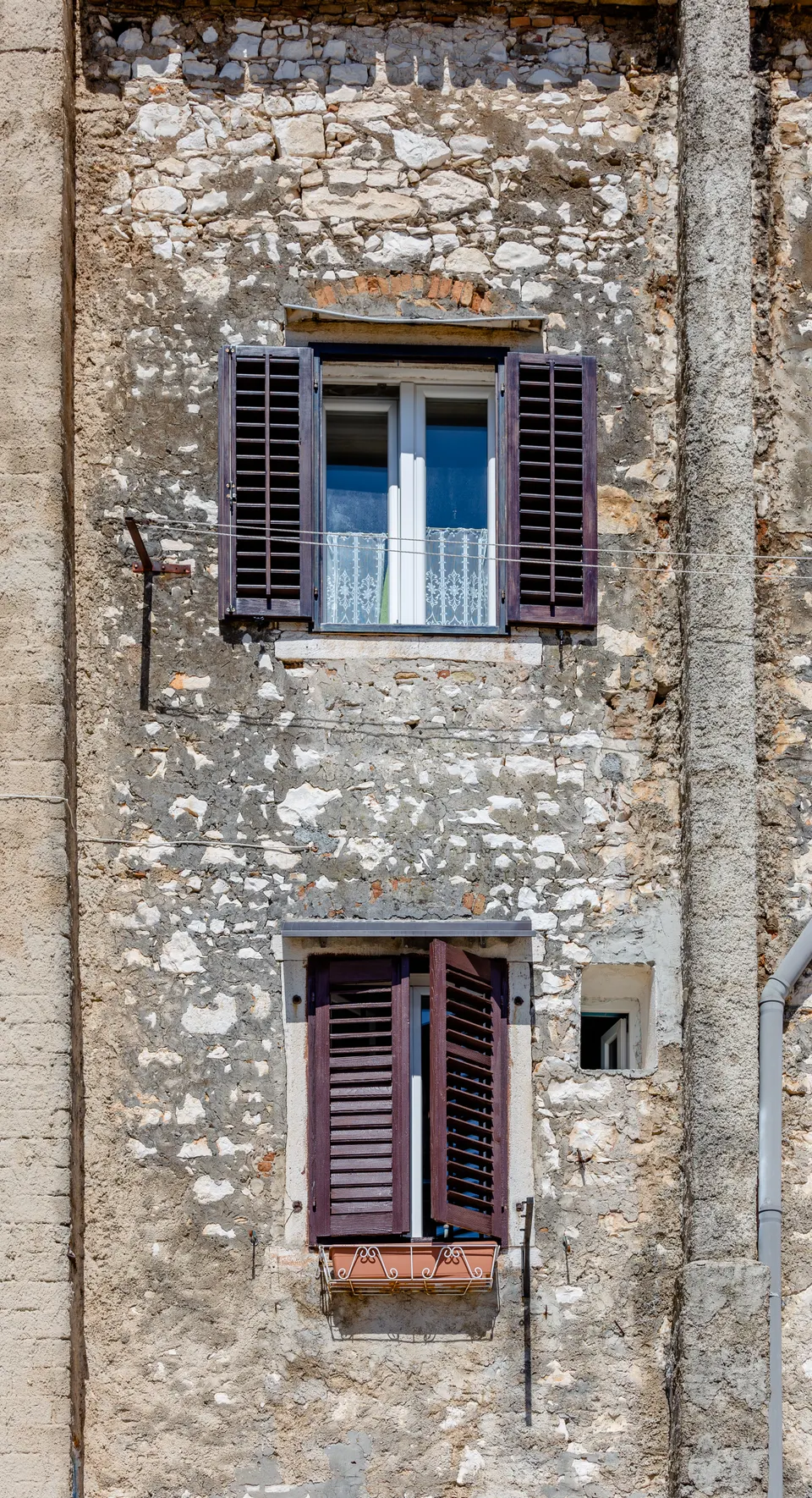
- Timber. Warm, repairable and right for stone houses and historic settings. It needs a good factory finish and regular maintenance, especially on south- and west-facing sides. Well looked after, it ages gracefully.
- Aluminium. Slim frames, large glass areas and very little maintenance. By the sea, ask specifically for a coating suited to coastal or marine environments and for proper pre-treatment, otherwise corrosion can start at cut edges and fixings.
- Timber-aluminium. Timber inside, an aluminium cladding outside. A popular compromise for coastal villas: the warmth of wood in the room, a weather shell outside.
- PVC. Affordable and low-maintenance, but less suited to strong sun in dark colours, where the profiles expand and can distort. Check the colour and the manufacturer's guidance for hot, exposed façades.
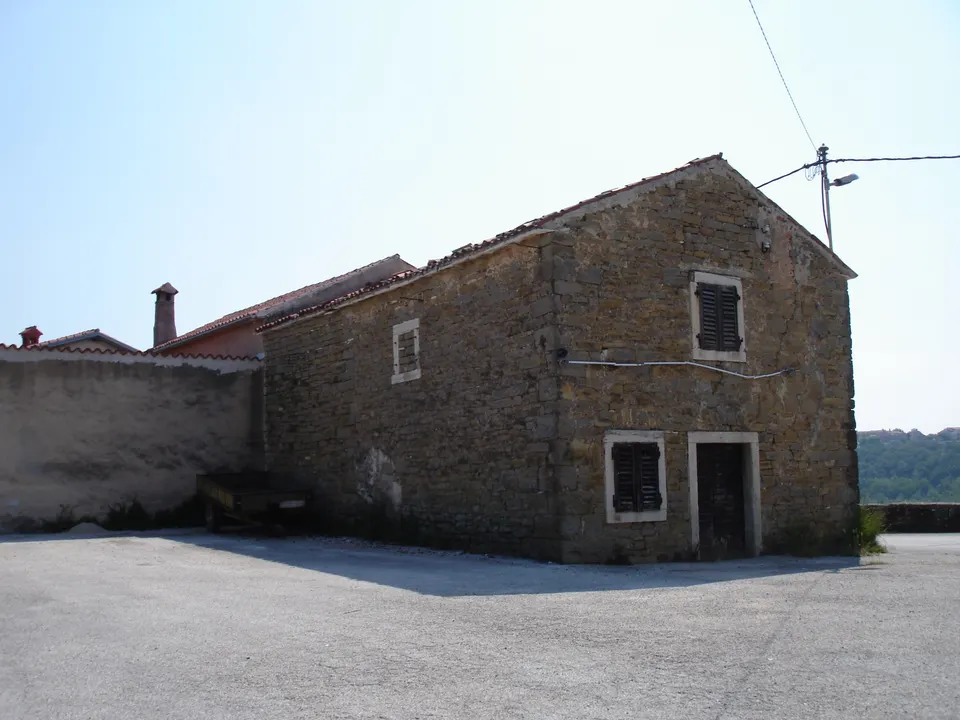
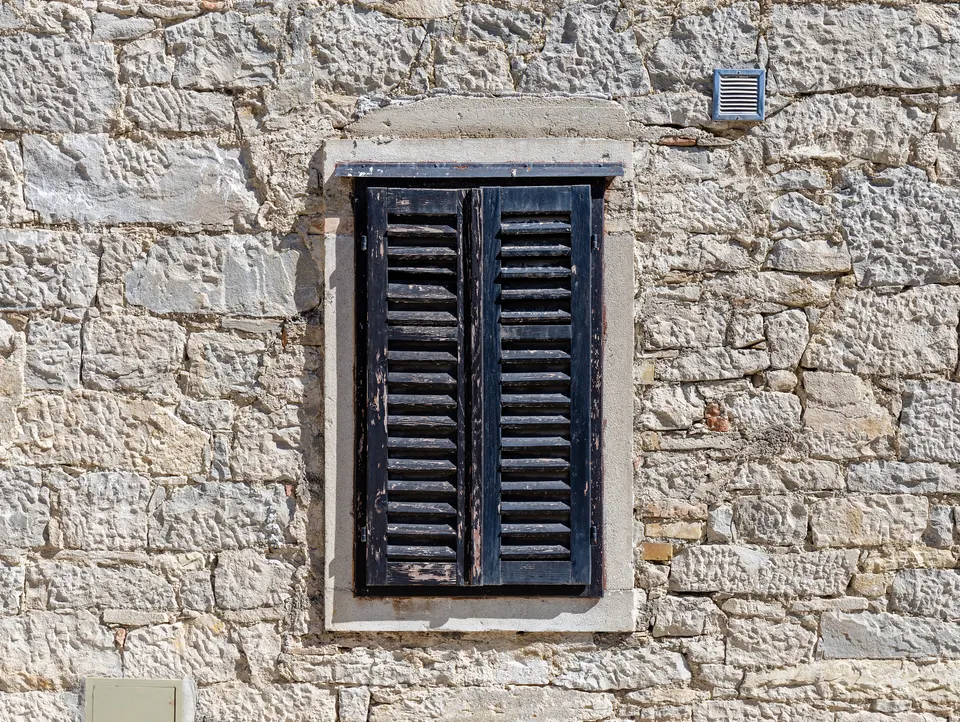
For an old stone house in a protected village centre, the material may not be entirely your choice. Conservation rules often require timber windows and shutters in a traditional pattern and colour. Your architect should confirm what applies before you order anything.
Glass that keeps the heat out
In northern Europe, glazing is chosen mainly to keep heat in. On the Adriatic, keeping heat out in summer matters at least as much. Modern double or triple glazing with low-emissivity coatings helps in both seasons, and solar-control glass reduces how much heat comes through large south- and west-facing panes. The trade-off is a slightly darker or more reflective look, so ask to see samples in daylight.
Laminated safety glass is worth considering for large doors, low windows and any glass near a pool or a children's play area. It also adds security for a house that stands empty for part of the year. Insect screens, fitted neatly into the frame or the reveal, are a small detail guests will thank you for on summer nights.
The shutter: Istria's oldest climate control
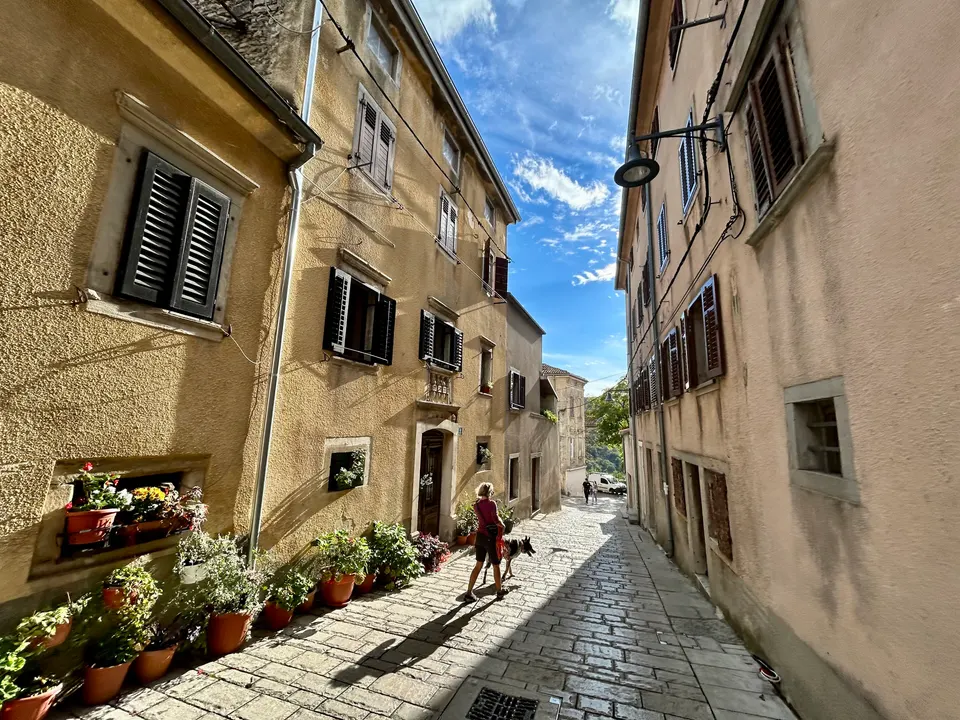
The louvred wooden shutter, known locally as škure from the Venetian word, is one of the most recognisable features of Istrian towns. It is also extremely effective. Closed against the midday sun with the window open behind it, it keeps direct heat off the glass while letting air move through the slats. Closed at night in winter, it adds a layer against wind and cold.
A closed shutter at noon does more for a summer room than most people expect.
For a new villa, external shading still deserves the same priority. Traditional hinged shutters, sliding shutter panels, external venetian blinds or roller shutters each suit different architecture. Whatever you choose, shading on the outside of the glass is far more effective against heat than curtains or blinds on the inside, because it stops the sun before it reaches the window. External blinds need to be rated for the wind on your site, and motorised systems should retract automatically in strong gusts.
Fittings, seals and installation
The details nobody photographs decide how a window performs. Handles, hinges and screws should be in a grade of stainless steel or a coated finish intended for coastal use. Shutter hinges and catches set into stone need to be fixed with corrosion-resistant anchors, or rust will stain the stone below them.
Installation matters as much as the product. The joint between frame and wall must be sealed against driving rain on the outside and against vapour on the inside, with proper sills that throw water clear of the façade. In an old stone house, that joint also meets lime plaster and irregular masonry, which calls for an installer used to working with it; our guide to lime plaster and breathable walls explains why. Large sliding doors to a terrace need a level, well-drained threshold so wind-driven rain does not end up on the floor.
Questions to ask before you order
- Is the frame finish or coating intended for a coastal, salty environment?
- What are the hinges, handles and screws made of?
- How will the frames be fixed and sealed into this particular wall?
- What glass is proposed for each orientation, and why?
- How are external blinds or shutters protected in high wind?
- What maintenance does the manufacturer expect, and how often?
- Who supplies spare parts and seals in ten years' time?
Inside the window
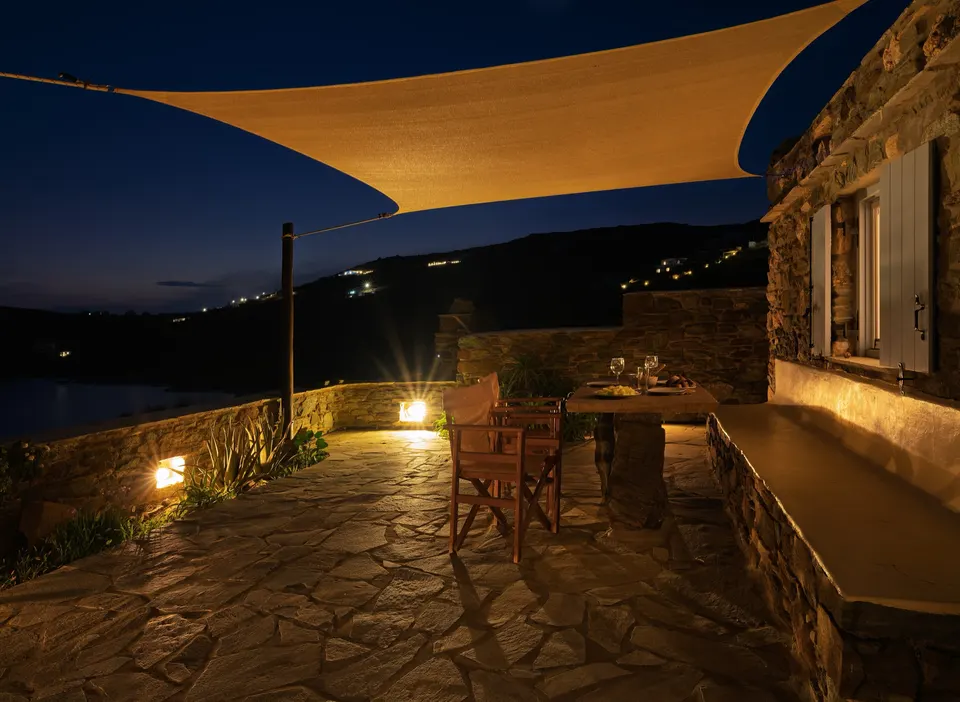
Deep stone reveals in old houses are an opportunity: a window seat, a built-in bench with storage, shelving that frames the view. Around a window, though, furniture lives with condensation, sun and the odd forgotten open shutter in a storm. That is one reason Lampisa builds in plywood rather than particleboard, which swells permanently once water reaches it. If you are also choosing what goes on the terrace, see materials that live with sea salt and sun.
Good windows by the sea are not the most expensive ones. They are the ones chosen for the exposure they will actually face, installed carefully and given a little care each spring.