Seven centuries of glassmaking on a small island in the Venetian lagoon, and why a hand-blown chandelier still changes a room in a way nothing else does.
Across the water from Istria, a short way north of Venice, lies a cluster of small islands where glass has been made for more than seven hundred years. Murano's name has become shorthand for decorative glass in general, which is both a compliment and a problem: plenty of glass sold as "Murano style" has never been near the lagoon. This guide explains what the real thing is, why it looks the way it does, and how to choose and care for a Murano light in your own house.
A short history of Murano glass
Venice had glassmakers long before Murano became famous. In 1291 the Republic ordered the furnaces moved out of the city to the island of Murano, largely because of the risk of fire in a crowded city built partly of timber. Concentrating the craft on one island also kept its secrets close, and for centuries Murano's glassmakers were both highly valued and closely watched.
Over the following centuries the island gave Europe some of its most important advances in glass. In the fifteenth century Murano's masters perfected cristallo, a remarkably clear glass, and later developed a vocabulary of decorative techniques, from fine white threads worked into clear glass to the tiny mosaic slices known as murrine. The great branching chandeliers associated with Venetian palaces, dressed in glass flowers and leaves, grew out of this tradition in the eighteenth century. Glassmaking continues on the island today, and the Glass Museum there tells the story in detail.
What makes it different?
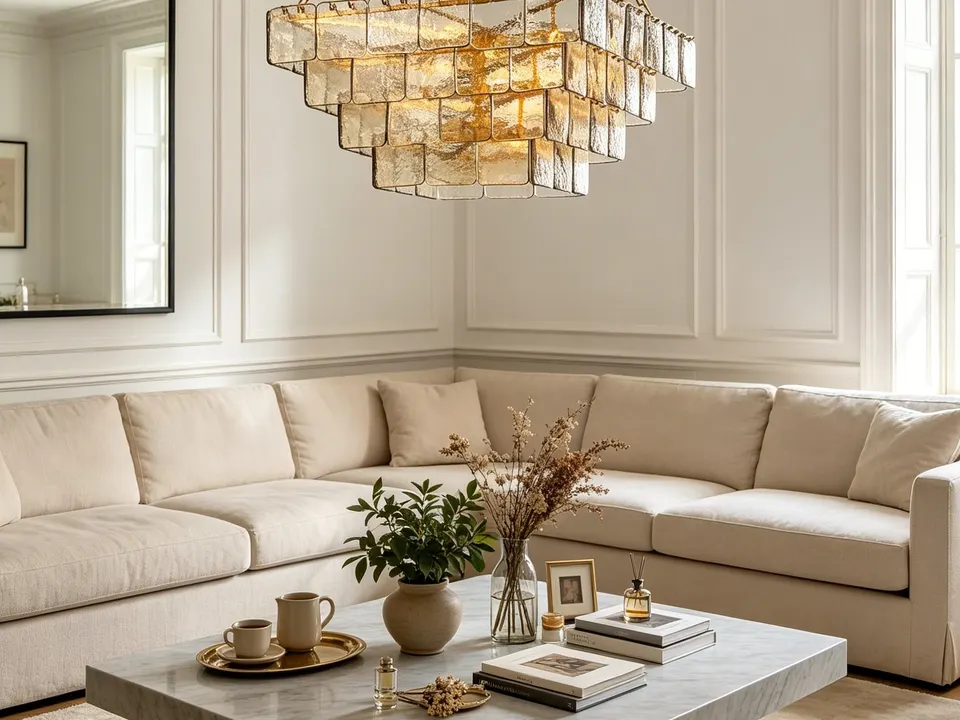
Murano glass is shaped by hand while hot, by blowing, pulling, pinching and cutting, using techniques passed down in workshops on the island. Colour is mixed into the glass itself, from minerals and metal oxides added to the molten batch, rather than painted on afterwards. The result is glass with depth: light passes through it and is coloured on the way, rather than bouncing off a surface.
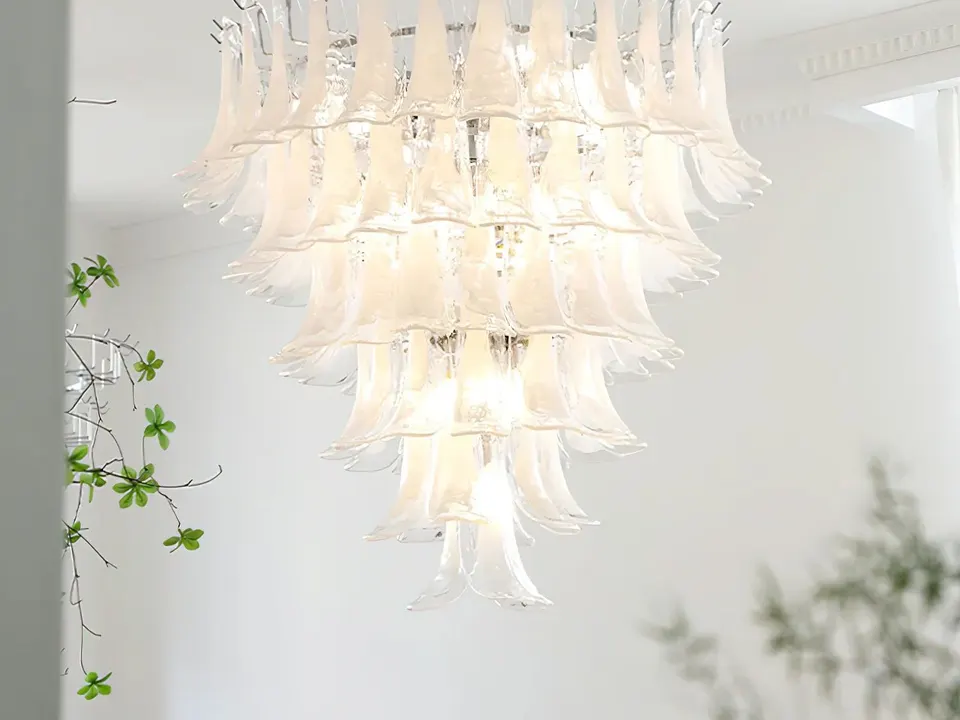
Because each element is formed by hand, no two are exactly alike. Petals, leaves and drops vary slightly in thickness and curve. In a chandelier with dozens of pieces, those small differences are what make the light feel alive: it is broken up unevenly, and the fitting looks different from every angle and at every hour.
How to recognise genuine Murano glass
There is no single test, and the honest answer is that buying from a trustworthy source matters more than any trick. Still, a few signs help.
- Small irregularities. Tiny bubbles, slight variations in thickness and shape are signs of hand work, not flaws.
- Colour in the glass. Colour should run through the glass, not sit on the surface as a coating that can scratch.
- Weight and depth. Hand-made glass usually feels substantial and looks deep when lit.
- Origin and documentation. Ask where the glass was made. Glass from the island's workshops can carry the collective trademark Vetro Artistico Murano, introduced to protect it from imitation.
- A price that makes sense. Hand-blown glass takes skilled time. A very low price for a large "Murano" chandelier deserves a question.
Light passes through Murano glass and is coloured on the way, rather than bouncing off a surface.
Where Murano lighting works in a house
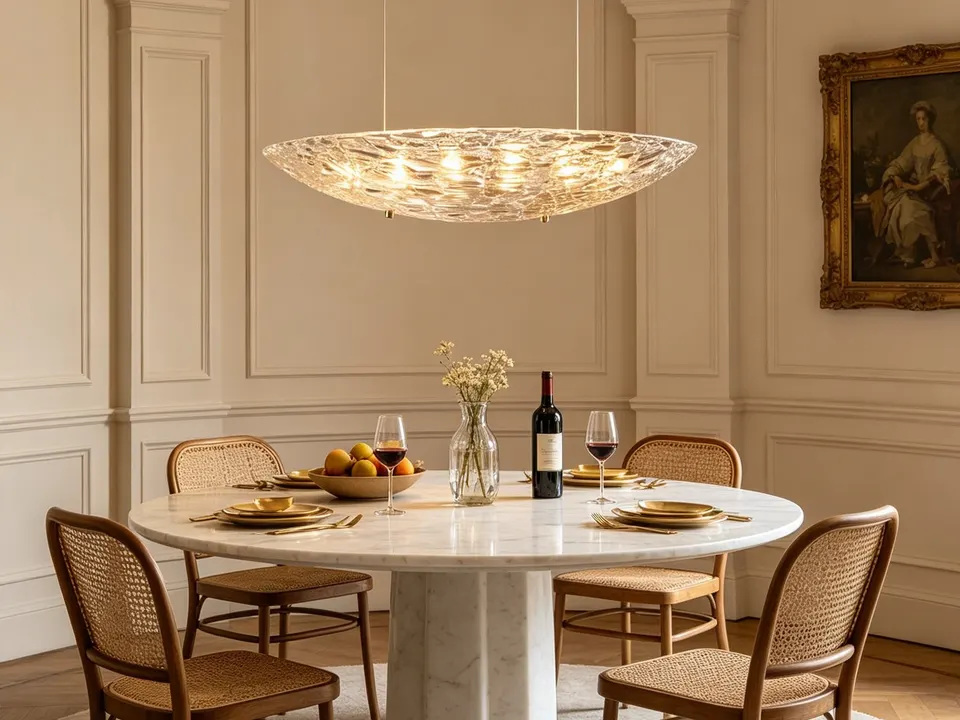
The obvious place is over the dining table, where a chandelier is seen from every chair and lights the faces around it. But Murano glass works well in other rooms too, as long as the piece suits the light it has to give.
- Dining room. A chandelier or a cluster of pendants, dimmed low in the evening.
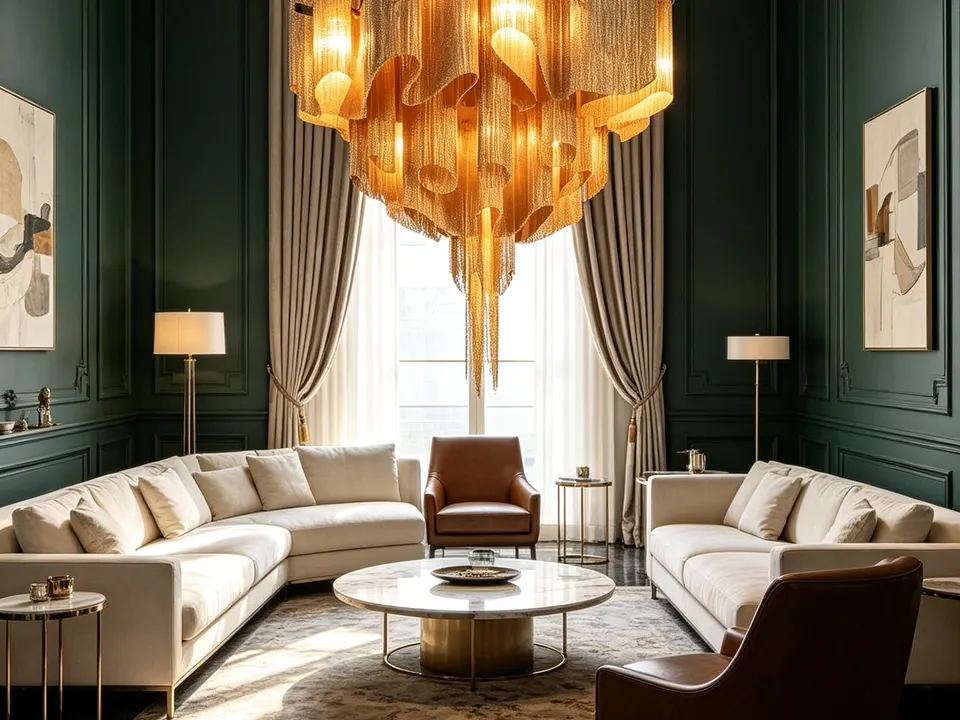
- Living room. A statement piece over a seating group, supported by lamps at sofa height.
- Entrance and stairwell. Tall cascading pieces that fill vertical space and greet guests.
- Bedroom. Opaline or milky glass for a soft, diffused glow rather than sparkle.
- Bathroom. Only with fittings rated for the zone they are in; ask an electrician.
Murano is not only for grand, traditional rooms. A single piece of hand-blown glass can be the one warm, crafted object in an otherwise simple, modern interior, and it is often in that contrast that it looks best. In an Istrian stone house, glass is a natural partner to rough walls and timber beams: it catches the light that stone absorbs. For sizing and hanging height, see how to choose a chandelier.
Clear, coloured or white?
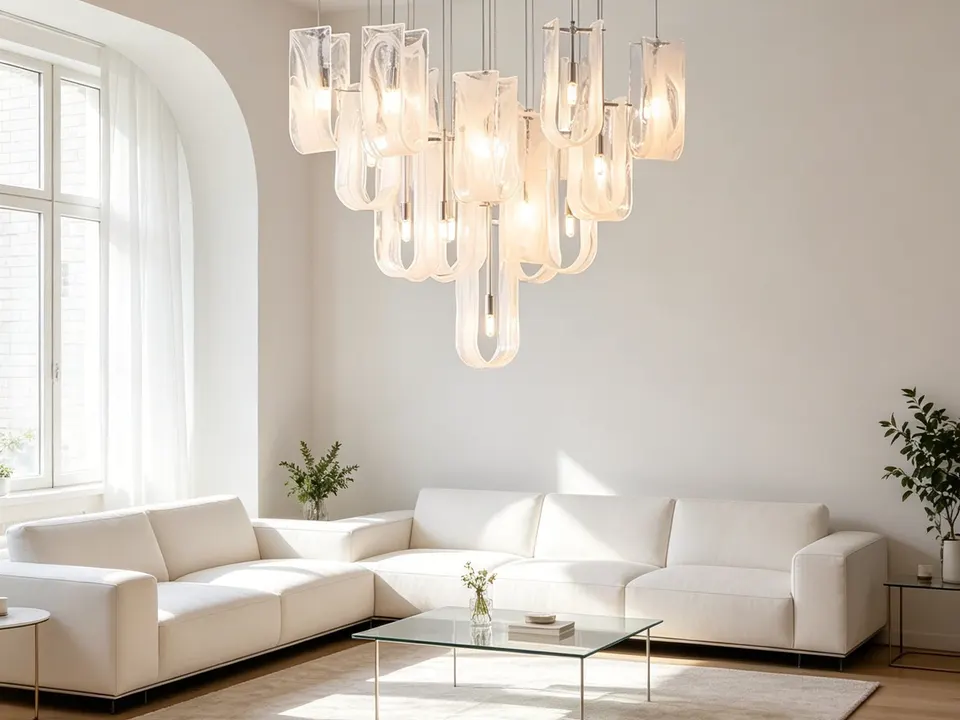
Clear glass sparkles and keeps a room feeling light. White and opaline glass diffuses the light into a soft glow, kinder in bedrooms and low rooms. Coloured glass, amber, smoke, green, tints the whole room and is at its best in the evening. Whatever you choose, ask to see it lit if you can, and with the kind of bulb you will actually use: warm white, dimmable, with good colour rendering.
How to clean and care for Murano glass
- Switch off and let it cool before touching any glass.
- Dust gently and often with a soft, dry cloth or a feather duster. Regular dusting means fewer full cleans.
- For a deeper clean, remove glass elements one at a time if the design allows, wash by hand in lukewarm water with a little mild soap, rinse and dry with a soft cloth.
- No dishwasher, no abrasives, no harsh chemicals. They can dull the surface and damage any gilding.
- Photograph before you dismantle. It makes putting a complex chandelier back together much easier.
- Mind the sea air. In a house close to the sea, salt can leave a film on glass and metal; gentle, regular cleaning keeps it bright.
Murano lighting from Lampisa
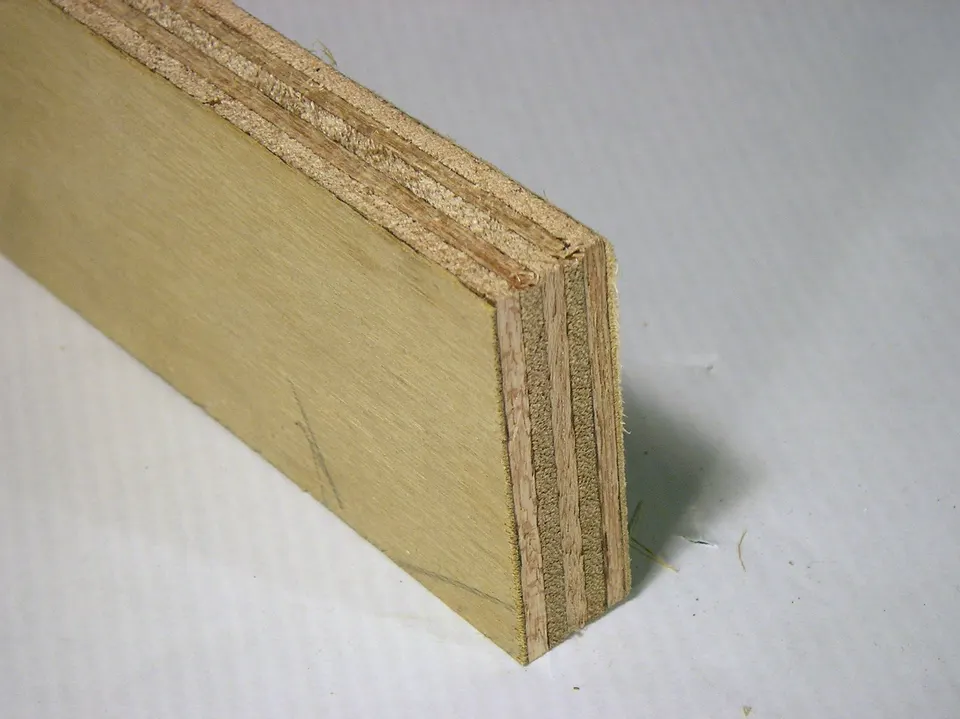
Lampisa, the Istrian atelier we work with, offers lighting including Murano glass chandeliers, which you can browse in its online catalogue. Because the atelier also builds furniture to measure, in plywood rather than particleboard, it can consider the chandelier, the table beneath it and the room as one, and show them together in a 3D render through its moodboard to render service before you decide.