More owners now stay for weeks rather than days, and bring their work with them. Where to put a desk in a villa, and how to make it a place you can work in all day.
For a long time, a holiday home was a place you went to stop working. Then laptops, video calls and remote contracts changed the pattern. Many owners in Istria now spend a month in spring or autumn at the house, working in the morning and walking to the sea or the village in the afternoon. Some rent their villas to guests who do the same. In both cases the question is the same: where does the work go?
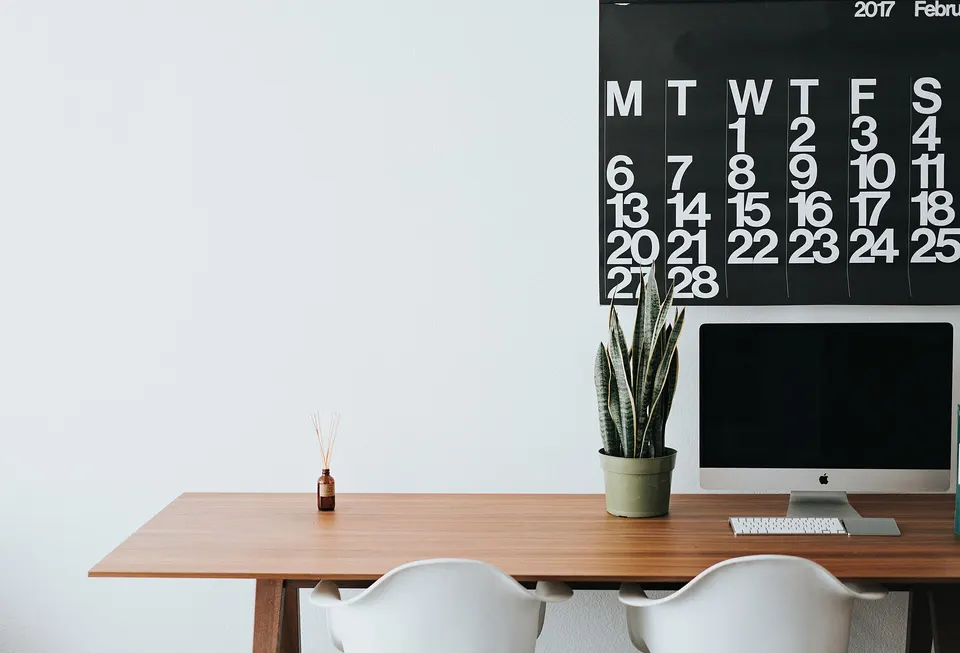
A laptop on the dining table works for a weekend. For a fortnight it means back pain, cables across the room, and clearing papers away before every meal. A proper working corner does not need a separate room. It needs a little planning.
Where should the desk go in a villa?
The best place is quiet, has good daylight from the side, and can be closed off or tidied away when the house fills up with family or guests. In practice there are four common options.
- A small spare room. The ideal if you have it. A box room or a former storeroom can become a study with a desk along the wall and shelves above.
- A guest bedroom that doubles as a study. A desk under the window and a bed that is made up only when guests come. Built-in storage keeps the two uses separate.
- A landing or a corner of the living room. A built-in desk in an alcove or at the end of a corridor uses space that would otherwise be wasted.
- A niche in a stone wall. Old houses often have deep window reveals and wall recesses. A desk fitted into one of them can be the most charming working spot in the house.
Avoid the bedroom you sleep in if you can. Work that is visible from the bed tends to stay on your mind.
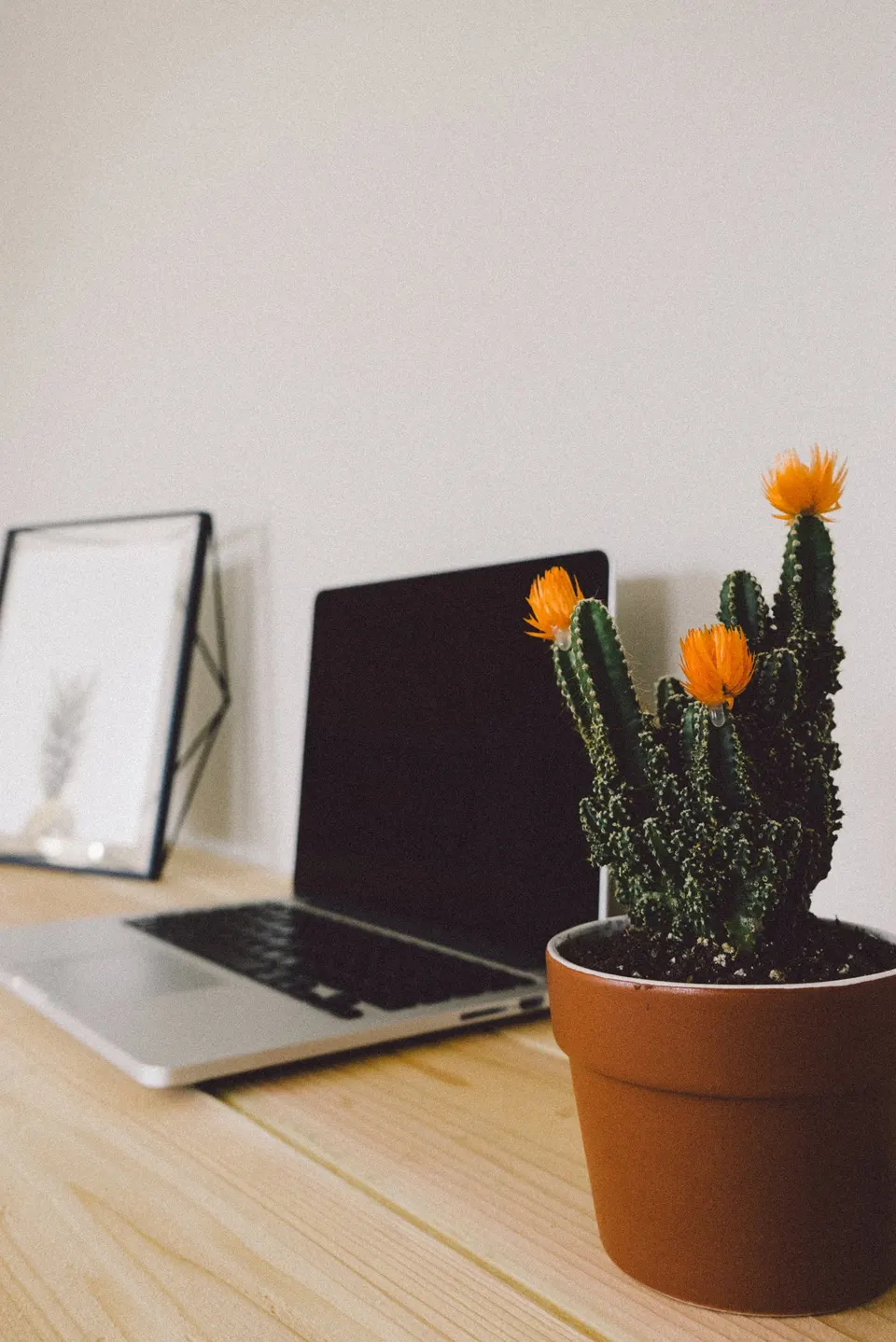
How do I get the light right?
Daylight from the side is easiest on the eyes. A desk facing a window looks romantic but puts your face in shadow on video calls and makes the screen hard to read in bright sun. A desk with its back to the window reflects the glass in the screen. Set the desk at a right angle to the window, and add shading: a linen blind or an internal shutter that softens the light without darkening the room.
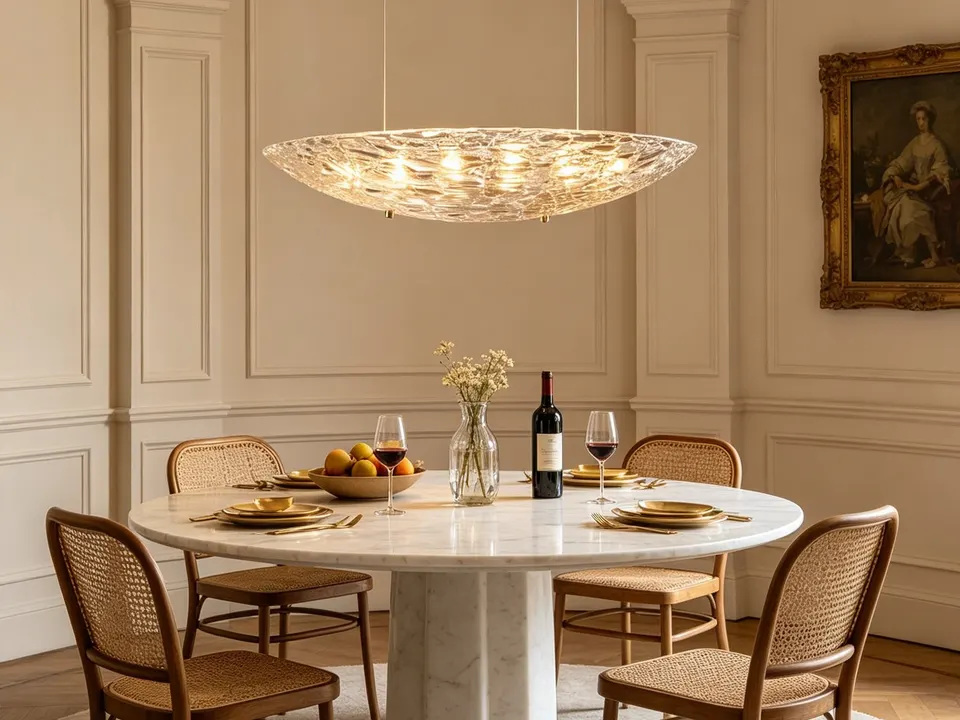
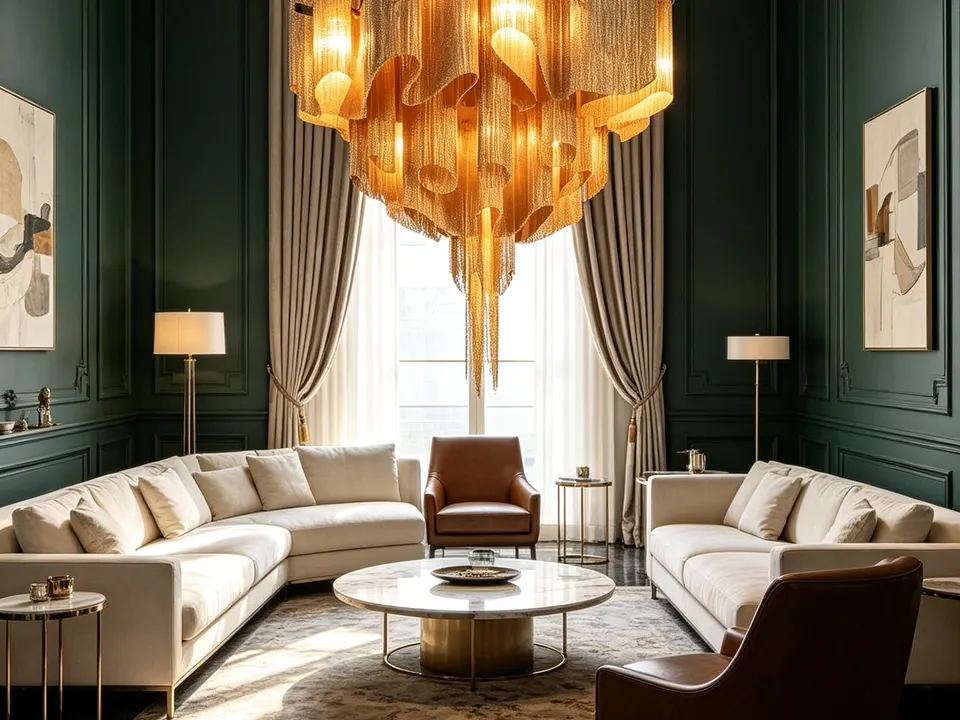
In the evening you need a good task lamp that lights the desk without glare, plus a softer light elsewhere in the room so you are not working in a pool of brightness. A glass lamp can do both jobs if the shade diffuses the light well. Lampisa's catalogue includes Murano glass lighting that can be chosen for a study as well as a living room. For more on this, see lighting a villa room by room.
What about the internet?
Before planning anything else, check the connection. Internet quality in Istria varies from house to house, especially in villages and in the countryside. Ask the provider what is available at your address, test the speed at the desk itself rather than next to the router, and remember that thick stone walls block wireless signal very effectively. A cable run to the desk or a mesh system with a point in the study usually solves the problem. Plan it before the walls are plastered.
A desk you can close at five o'clock is worth more than a view you cannot see because of the glare.
The chair, the height and the cables
A holiday house is not an office, but your back does not know that. A chair with adjustable height and proper support makes more difference than any desk. Choose one that suits the style of the house so it does not have to be hidden away. Raise the laptop so the top of the screen sits near eye level, or use a separate screen, keyboard and mouse. Your neck will thank you after the first week.
Plan sockets at the desk, not just near it: for the computer, a lamp, a phone charger and a printer. A cable tray or a grommet in the desktop keeps wires out of sight. These details cost almost nothing at the building stage and are a nuisance to add later.
- Side light from a window, with a blind or shutter to soften it.
- A tested connection at the desk, not just at the router.
- A good chair with adjustable height.
- Screen at eye level with a separate keyboard.
- Sockets and cable routing built into the desk.
- Closed storage so work can disappear when the holiday starts.

Can a desk disappear when guests arrive?
In many villas the working corner has to share a room with something else. Built-in furniture is the cleanest answer. A desk can be part of a wall of cupboards, with doors that close over the screen and papers at the end of the day. A fold-down desk inside a wardrobe-height unit takes almost no floor space. In a guest room, a long built-in unit can serve as a dressing table for guests and a desk for the owner.
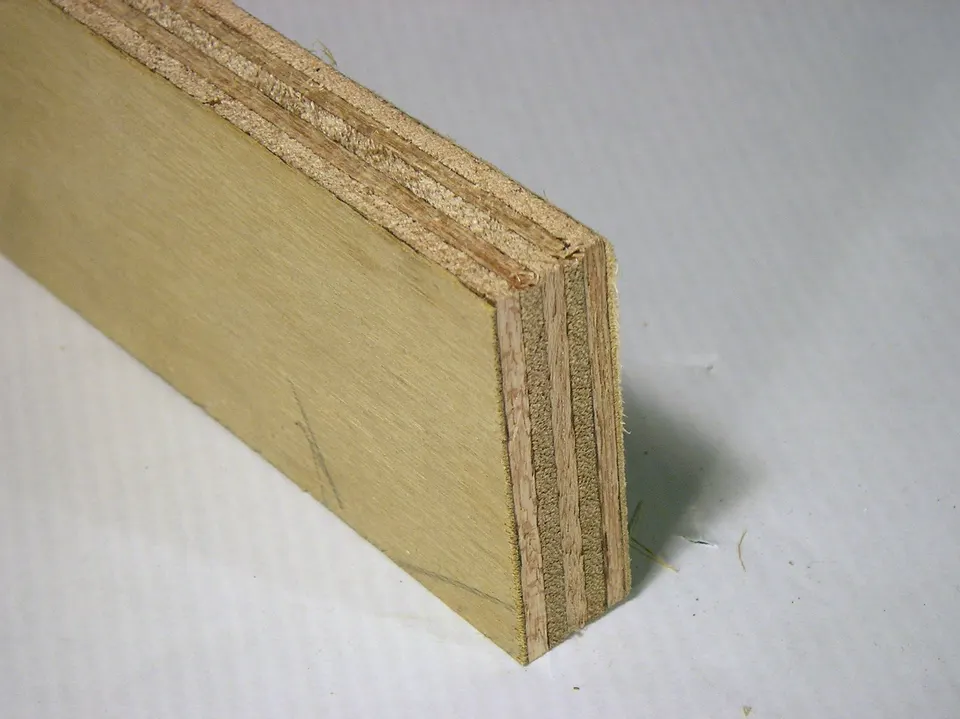
This kind of joinery has to be made to measure, because it must fit the real room, including uneven stone walls and deep window reveals. Lampisa builds it in plywood rather than particleboard: a fold-down desk is opened and closed thousands of times, and hinges and fittings keep holding in plywood after years of use. Our guide to built-in wardrobes explains how this kind of joinery is planned.
Working from Croatia for longer
If you plan to spend long periods working from Istria, check the rules that apply to you. EU citizens can generally stay and work remotely with few formalities, while Croatia also has a residence route aimed at remote workers from outside the EU. Rules change and depend on individual circumstances, including tax, so ask a local lawyer, an accountant or the relevant authorities before you rely on any of it.
Planning it with the rest of the house
A home office works best when it is planned with the rooms around it rather than squeezed in afterwards. With the From moodboard to render service, you can bring images of the working corner you have in mind, and Lampisa shows it in a 3D render of the actual room, with the desk, shelving and lighting in place, before anything is built.