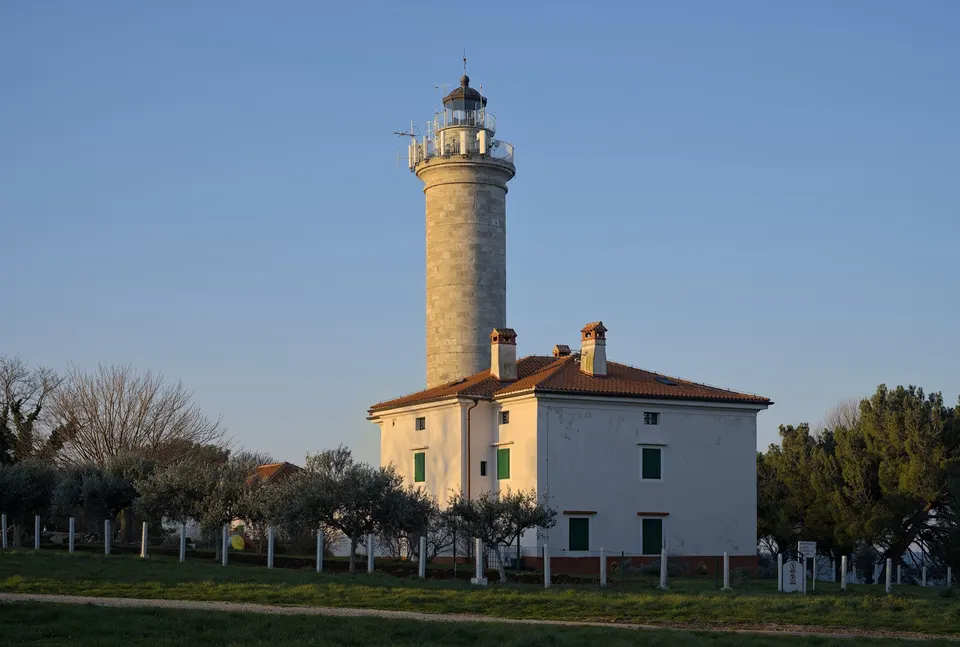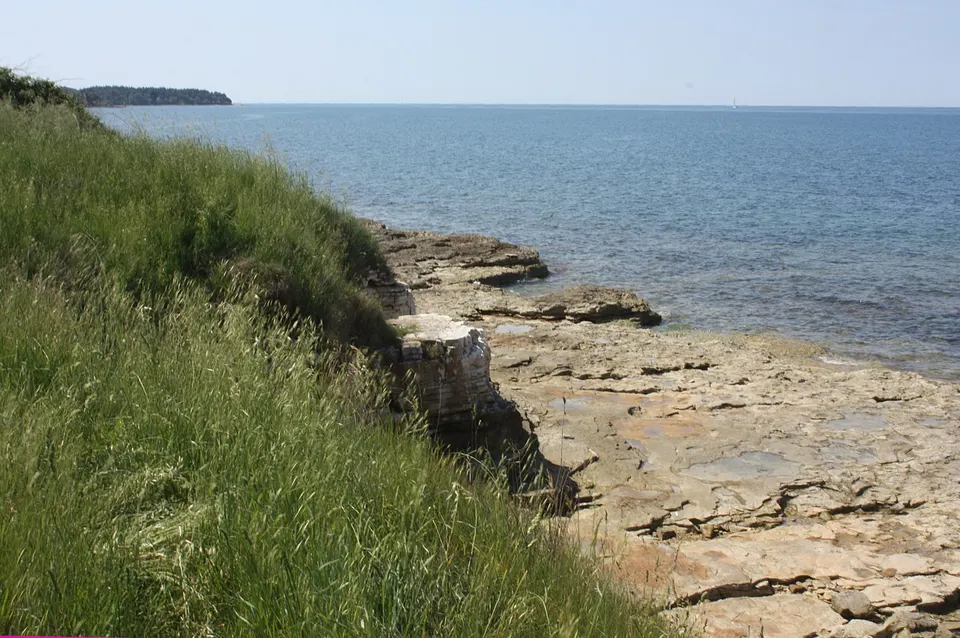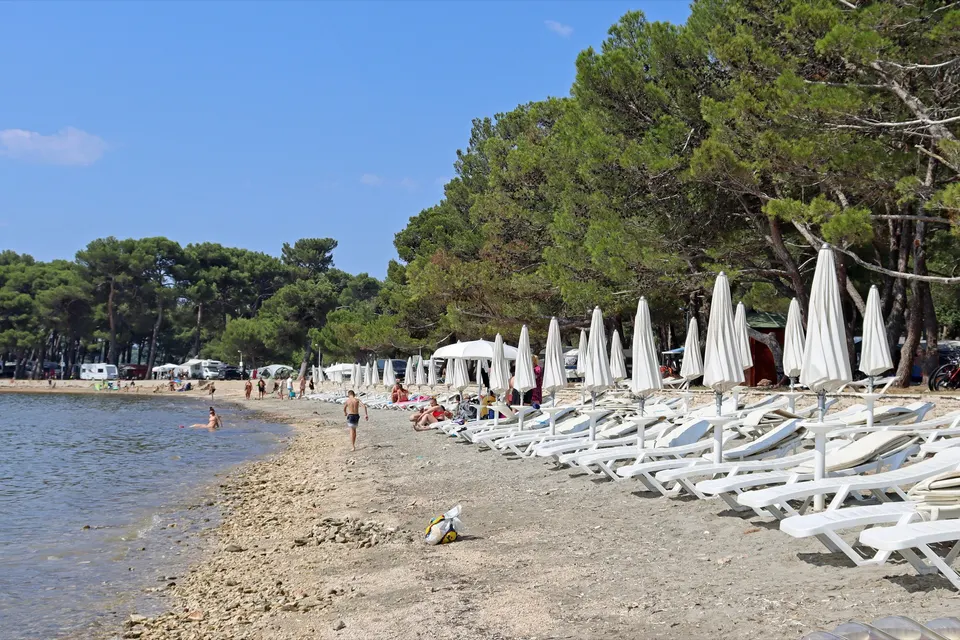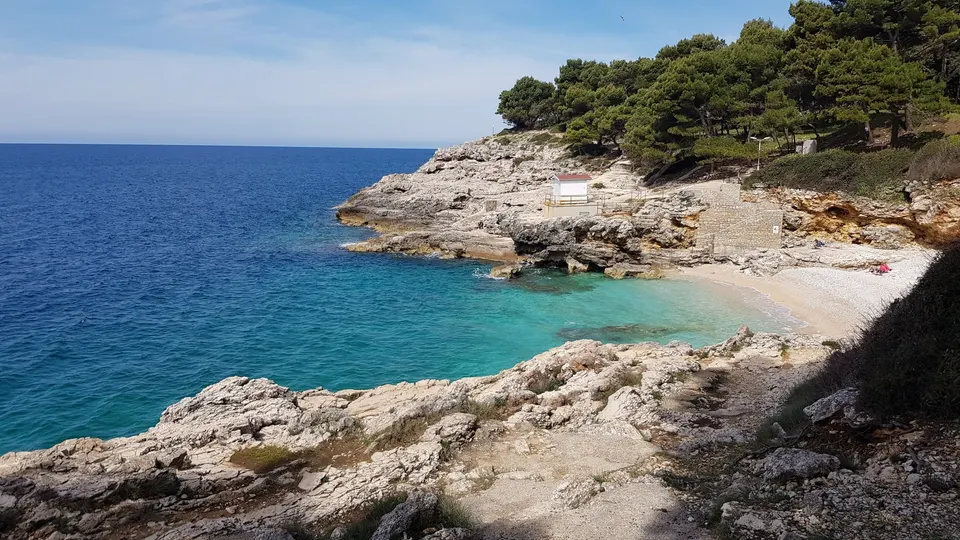
Rock ledges under the pines, small pebble bays and clear water a short ride from the Arena. Where to swim in Pula, and how to choose the right spot.
Pula is a rare thing on the Adriatic: a working port city with a Roman amphitheatre at its heart and a coastline of coves, pine woods and rock ledges only a few minutes from the centre. There is no single famous beach here. Instead, the city is ringed by small peninsulas, each with its own shore, and most of the swimming happens from flat rocks, pebble bays and concrete platforms set into the stone. If you like clear water and a bit of exploring, Pula is one of the best town bases in Istria.
What are the beaches in Pula like?
The coast around Pula is limestone. It meets the sea in three ways: low natural rock, sometimes smooth and sometimes sharp; small coves of pebbles and fine gravel; and built bathing areas with steps, ladders and paved terraces. Real sand is almost absent. The water is usually very clear, and the bottom drops quickly in many places, which suits swimmers and snorkellers more than toddlers. Most of the best spots are south and south-west of the centre, on the peninsulas of Verudela, Punta Verudela and Stoja.
Verudela and Punta Verudela
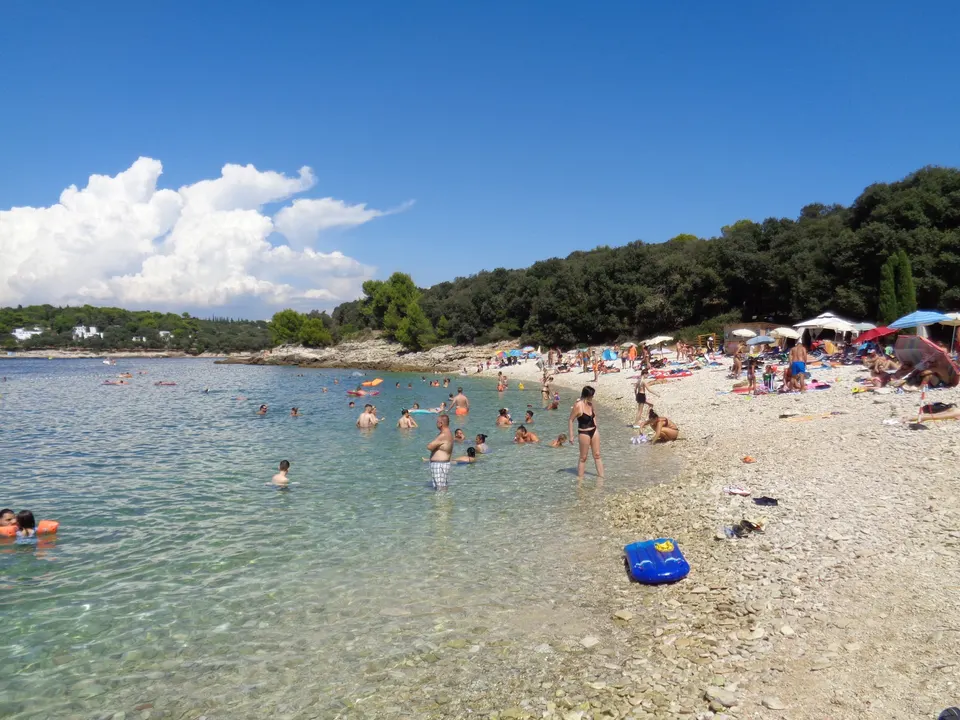
Verudela is the peninsula most visitors end up on, and for good reason. It is the city's main hotel and holiday area, but much of it is still pine wood, with paths leading down to a long, indented shoreline. Along the way you find everything from busy organised beaches with cafés and sunbed rental to quiet rock shelves where you can lay a towel and climb in by ladder. On the Verudela side there is also Hawaii beach, Havajska plaža, a small pebble cove known for its strikingly turquoise water when the sun is high.
On the tip of the neighbouring headland, Punta Verudela, Ambrela is one of the best known beaches in Pula: a gently shelving pebble bay with pine shade behind it, popular with families because the entry is easier than on the open rock. It gets busy in July and August, so come early or late. The old Austro-Hungarian fort on Verudela now houses an aquarium, which makes a useful plan B on a windy or rainy day.
Stoja: cliffs, pines and the open sea
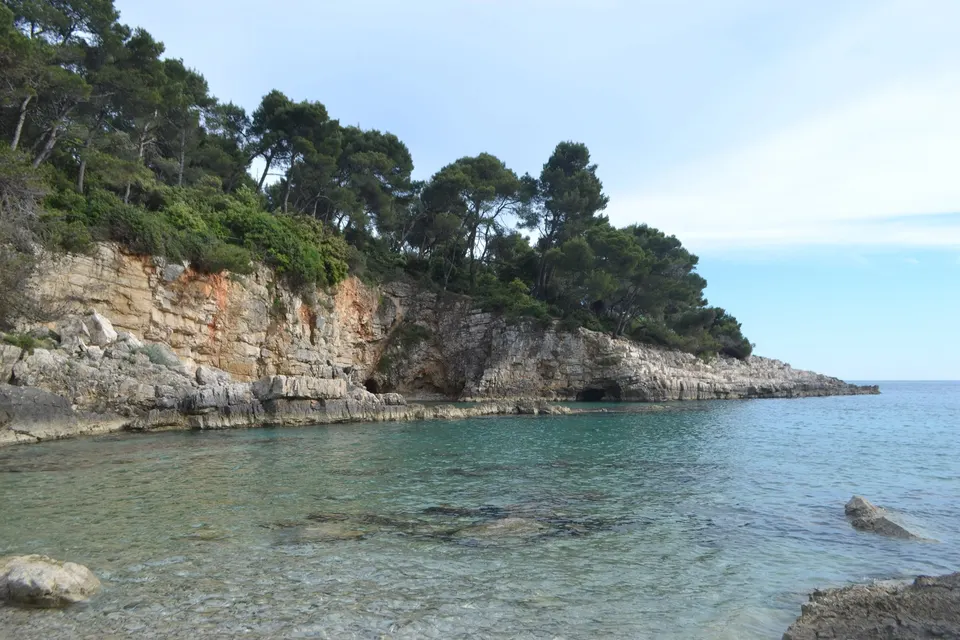
Stoja, the peninsula west of Verudela, has a wilder feel. Its shore faces the open sea, and the rocks are higher and more broken, with ledges, small caves and short cliffs. The best known stretch is Galebove stijene, the Seagull Rocks, a favourite with confident swimmers and with local teenagers who jump from the higher points. There is a large campsite on the peninsula, and the pine wood above the shore gives welcome shade on hot afternoons.
Stoja is not the place for small children who want to paddle. It is the place for snorkelling, for long swims along the rock, and for sunsets straight out to the west. If the bura is blowing, the water here can be choppy while the bays on the other side of town stay calm.
You can walk from a Roman amphitheatre to a quiet rock in less time than it takes to find parking at many resorts.
Other coves around the city
Between the city centre and Verudela, the bays of Valkane and Valsaline have pebble beaches within walking distance of the residential streets, used mostly by locals. Further along the coast, the forest park at Gortanova uvala, on the western side of Pula, mixes rock and pebble with shady paths, and is a pleasant choice on a hot day. North of the city, towards Štinjan and Fažana, the coast is lower and greener, with the Brijuni islands on the horizon. If you have a car or a bicycle, it is worth also heading south to Cape Kamenjak and Premantura, the protected tip of Istria, for a full day of coves and cliffs.
Which Pula beach for whom?
- Families with small children. Ambrela on Punta Verudela and the sheltered pebble bays on Verudela. Look for gradual entries, and bring water shoes.
- Snorkelling. The rocky shores of Stoja and the outer edges of Verudela, where the bottom falls away quickly and the water is clearest.
- A quiet swim. Natural rock between the organised beaches, early in the morning or in the last two hours of daylight.
- Shade. Stoja, Verudela and Gortanova uvala all have pine woods close to the water.
- Swimming without a car. Valkane and Valsaline are reachable on foot from parts of the city, and local buses run towards Verudela and Stoja.
When is the best time to swim in Pula?
The swimming season runs roughly from late May to early October, but the sea is at its most pleasant from mid June to the end of September. July and August are the busiest months, when the popular beaches fill early and parking near Verudela becomes difficult. June and September are the sweet spots: warm water, softer light and space on the rocks. For a broader view of the year, see our guide to the best time to visit Istria.
Good to know
- Water shoes. The rock can be sharp, and sea urchins live on many stretches of the shore.
- Getting there. Walking, cycling and local buses are often easier than driving in summer. If you drive, arrive before mid-morning.
- Facilities. Organised beaches have showers, toilets and cafés; natural rock usually has none, so bring water.
- Wind. On bura days the west-facing Stoja shore can be rough; the more enclosed bays on Verudela are usually calmer.
- Respect the place. Take your rubbish with you and do not remove stones or shells from the shore.
- Water quality. Croatia publishes official bathing water results online during the season if you want to check a particular beach.
Pula's beaches reward curiosity. Start at Verudela or Stoja, follow the paths through the pines, and you will soon have your own favourite rock. Then walk back into town for a late lunch in the shadow of the Arena and the Roman city.