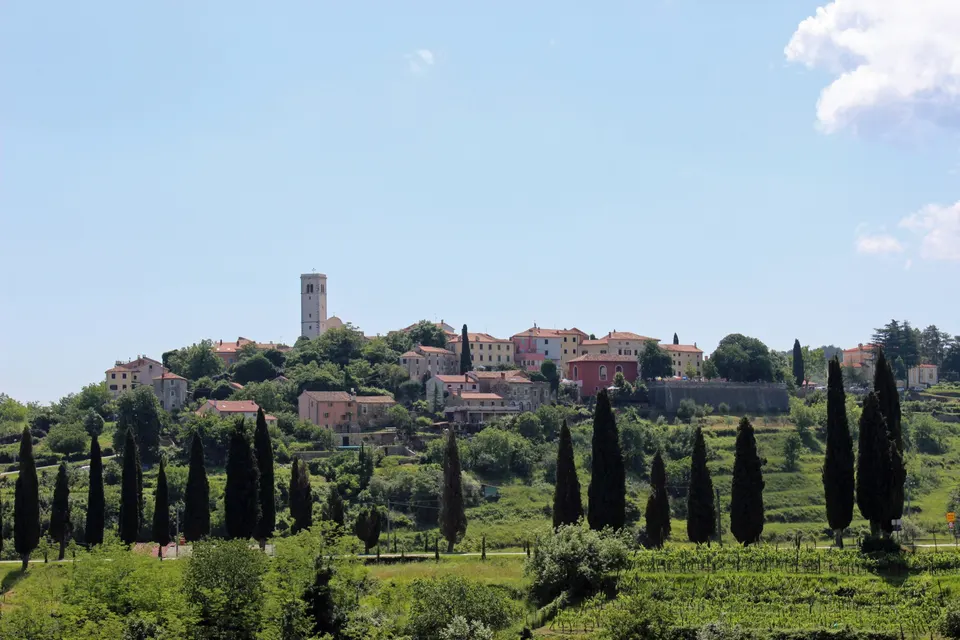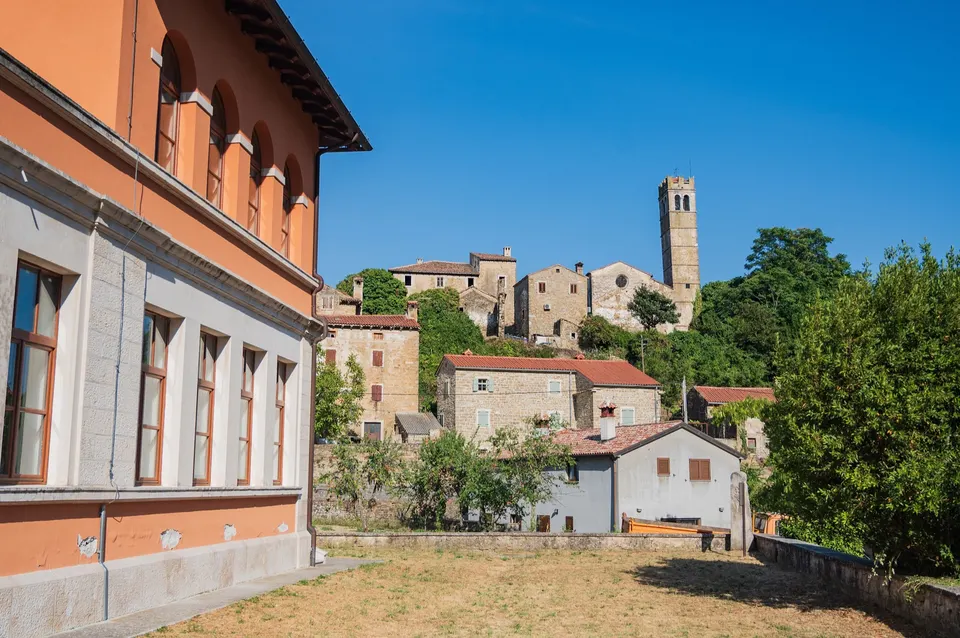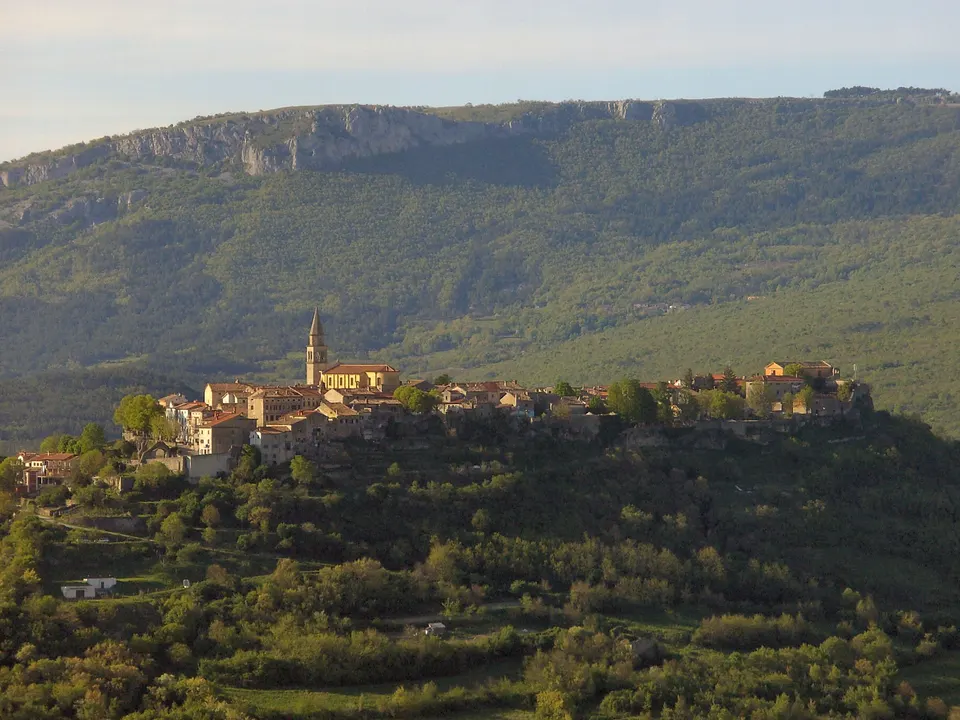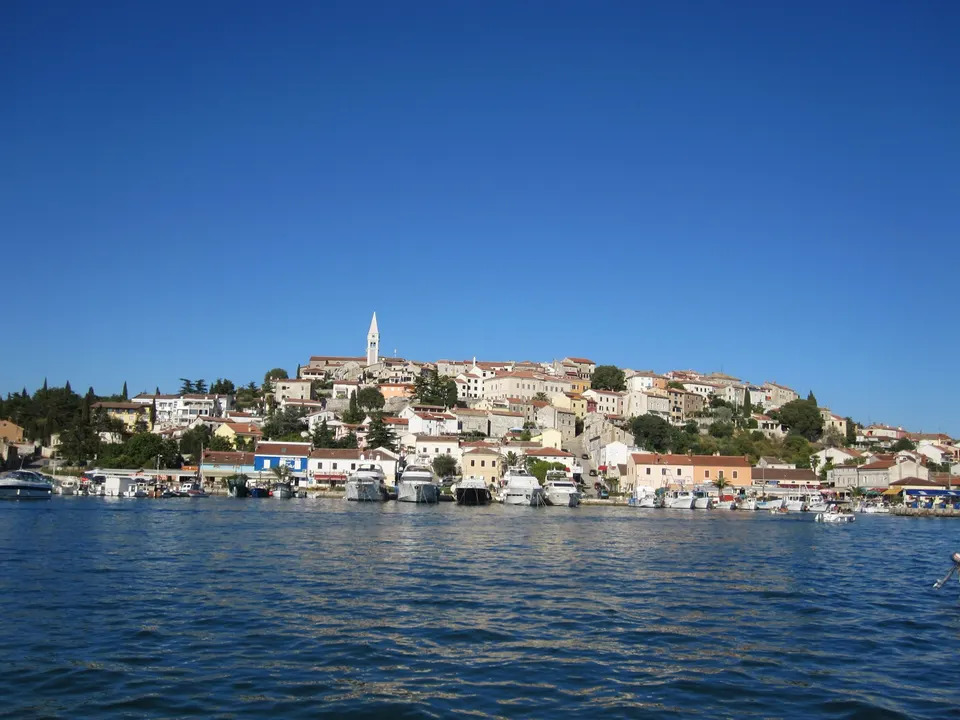
A hilltop town above a harbour full of islets, and a small village named after its springs. Vrsar and Funtana are the quieter side of the Poreč riviera, with Lim Bay just to the south.
South of Poreč, the west coast of Istria breaks into a scatter of small green islets, sheltered coves and pine woods. On a hill above this sheltered water stands Vrsar, one of the most photogenic small towns on the coast. A few kilometres to the north lies Funtana, a former fishing village that has become a relaxed resort. Together they make a good base for anyone who wants the sea, the islands and the countryside within easy reach, without the bustle of a larger town.
What to see in Vrsar
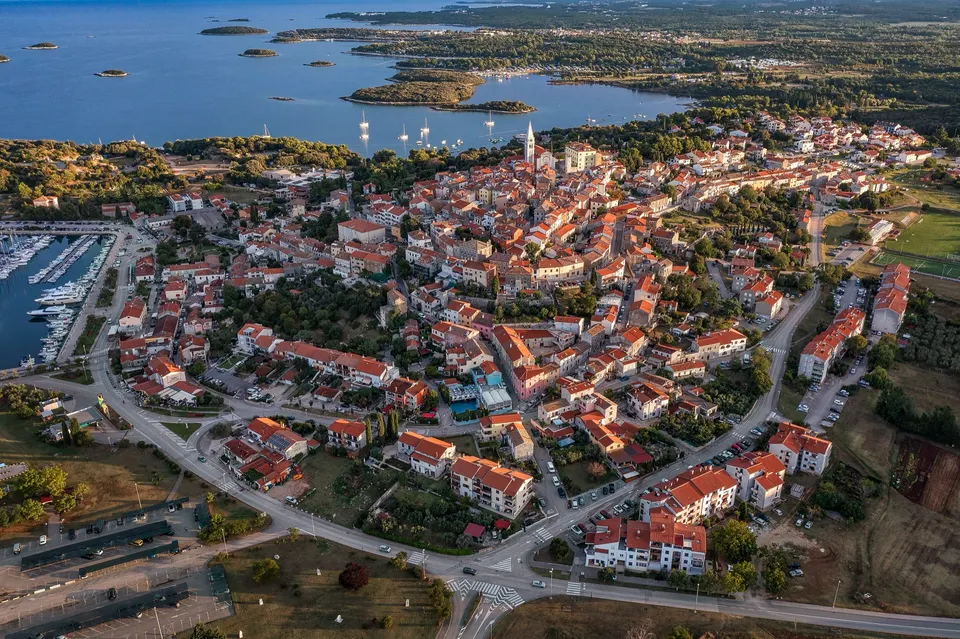
Vrsar (Orsera in Italian) is built on a rounded hill, its houses climbing from the harbour to the parish church at the top. For centuries the town belonged to the bishops of Poreč, who used it as a summer residence, and the old episcopal palace still stands on the hilltop. The town was walled, and parts of the old gates and fortifications survive among the houses.
At the summit stands the parish Church of St Martin with its tall, slender bell tower, which is the landmark you see from the sea. Down near the harbour, on the edge of town, is the Romanesque Basilica of St Mary, a small and simple stone church that is one of the most important medieval buildings on this part of the coast. The walk between the two, up stepped lanes and under arches, is the best way to see Vrsar.
- The viewpoint at the top. From the square by the parish church, the view takes in the harbour, the marina and the islets lined up along the coast.
- The Basilica of St Mary. Plain, solid and very old, with the quiet atmosphere of early medieval Istria.
- Casanova's Vrsar. Giacomo Casanova visited the town in the eighteenth century and mentioned it in his memoirs, a story the town still enjoys telling.
- The harbour. Fishing boats, excursion boats and a small promenade, liveliest in the evening.
A town of stone and sculpture
Vrsar has a long connection with stone. The quarry at Montraker, on the coast near the town, supplied stone in the past, and it later became the setting for an international school of sculpture. On the edge of Vrsar is the sculpture park of Dušan Džamonja, one of the best-known Croatian sculptors of the twentieth century, where large works stand outdoors among olive trees and lawns. It is a calm and unexpected place, and well worth an hour.
From the top of Vrsar, the islets lie along the coast like stepping stones.
Funtana: the village of springs
Funtana takes its name from the freshwater springs that once made this spot valuable to sailors and farmers. Its small old core gathers around a church and a few stone houses near the sea, and the little harbour still has local boats. Around it, the coastline is mostly given over to campsites, apartments and pine-shaded bathing areas, which makes Funtana popular with families who want easy access to the water.
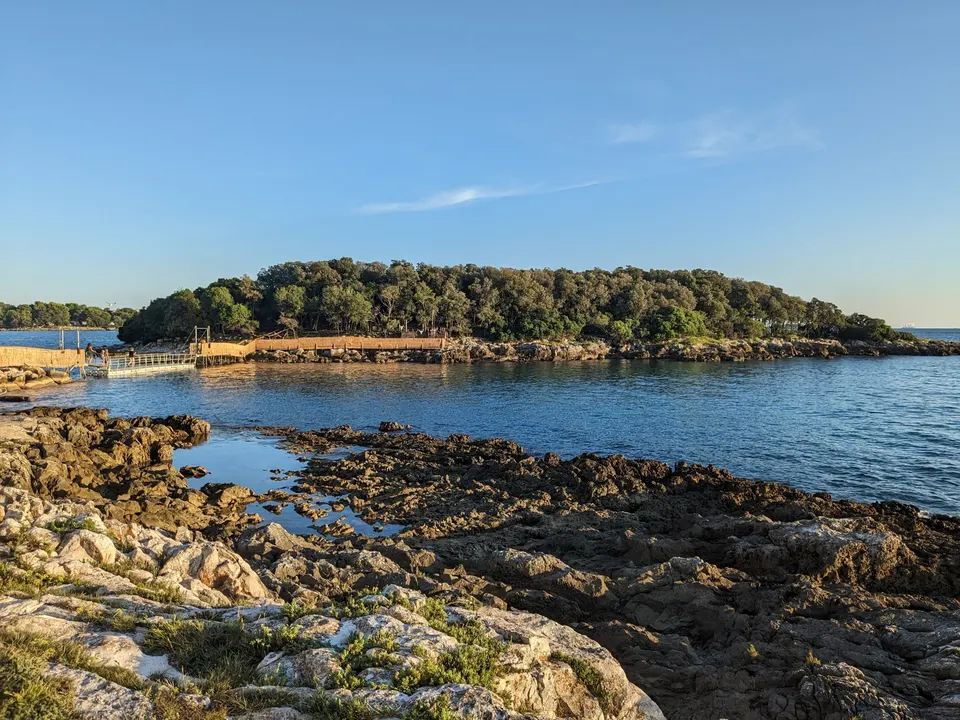
Just off the shore lies the wooded islet of Školjić, linked to the coast by a short walkway, a pleasant place for a swim or an evening walk. Further along, rocky points and coves continue towards Vrsar in one direction and Poreč in the other.
Where to swim in Vrsar and Funtana
The coast here is rocky and pebbly, with clear water and plenty of shade under the pines. Bathing areas near both villages have easy access and facilities, while the coves between them are quieter. The islets in front of Vrsar can be reached by boat or kayak on calm days, and boat excursions leave the harbour in summer. One of the islands, Koversada, is home to one of the oldest naturist resorts in Europe, and naturism has a long and relaxed tradition on this stretch of coast.
Lim Bay and the countryside
Just south of Vrsar, the sea cuts deep into the land to form Lim Bay, a narrow, steep-sided inlet framed by forest. It is one of the most striking landscapes in Istria, known for its mussels and oysters, and boat trips from Vrsar run along it in season. Read our full guide to Lim Bay.
- Poreč. A short drive north, with the UNESCO-listed Euphrasian Basilica. See our guide to Poreč.
- Rovinj. South of Lim Bay, easy for a day or an evening.
- Inland villages. Roads lead up through vineyards and olive groves to quiet stone villages and family farms.
Good to know
- Getting there. Vrsar and Funtana lie just off the coastal road south of Poreč. Pula airport is the nearest; Trieste and Ljubljana are also within driving distance.
- Parking. Vrsar's old town is steep and small; park near the harbour or below the centre and walk up.
- Best time. June and September offer warm water and quieter streets. In high summer, book well ahead.
- Shoes. The lanes are cobbled and steep, and the shore is rocky: comfortable soles and water shoes help.
Vrsar and Funtana are not about grand monuments. They are about the view from the top of a small hill town, the green islets in the morning light and an evening walk along a quiet harbour. For many visitors, that is exactly what an Istrian holiday should be.