Pine-shaded shores, the Blue and Green Lagoons, and a small island a few minutes across the harbour. A practical guide to swimming in and around Poreč.
Poreč is best known for the Euphrasian Basilica and its golden mosaics, but for most summer visitors the day begins and ends at the sea. The town sits on a low peninsula, and the coast on either side is lined with pine woods, rocky shores and long, gently curving bays. Add a small island just across the harbour, and you have one of the easiest places in Istria to combine a historic old town with a proper beach holiday.
What are the beaches in Poreč like?
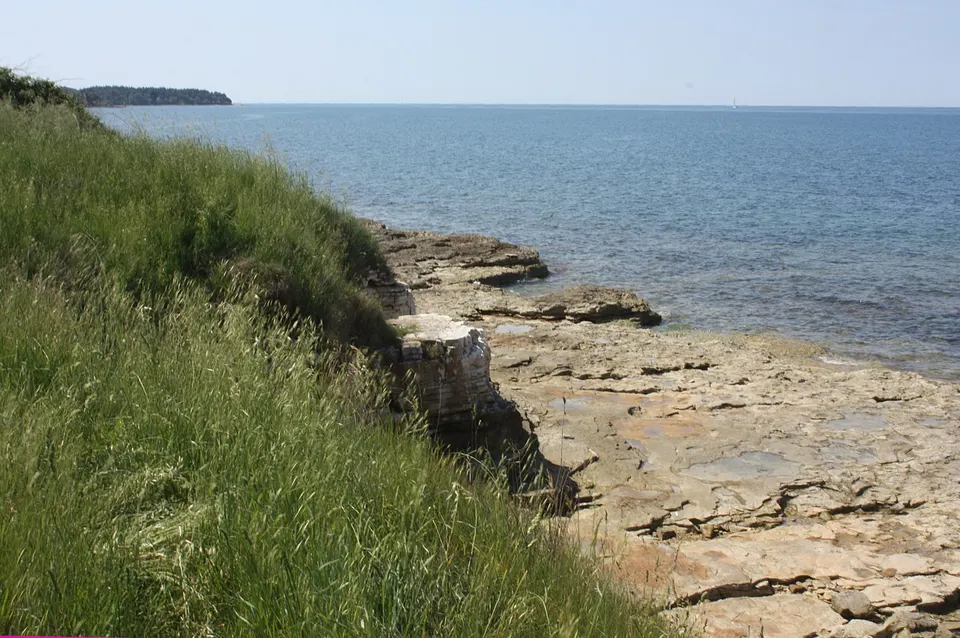
Like the rest of the west coast, the shore here is limestone. Expect flat rocks, pebble and gravel beaches, and paved bathing areas with steps into the water. Much of the coast around Poreč is lower and gentler than further south, and there are many shallow, sheltered bays, which makes it good for families. Sand is rare. Many stretches belong to large resort areas with campsites and hotels behind them, so facilities are good, but the beaches themselves are generally public and open to everyone.
Swimming in the town itself
You can swim within walking distance of the old town. The waterfront promenade leads in both directions to rocky and paved bathing spots, with ladders and platforms set into the shore and cafés close by. They are not the most beautiful beaches in the area, but they are wonderfully practical: a swim before breakfast, then a coffee on the waterfront and a walk to the Euphrasian Basilica before the day gets hot.
Sveti Nikola: the island in front of the town
Directly opposite the harbour lies the island of Sveti Nikola, St Nicholas, low and green, with a hotel among its pines. In summer, small boats shuttle across from the waterfront in a few minutes, and the island's rocky and paved shores make a pleasant change from the mainland, with views back to the town's bell towers. It is a classic half-day trip, and an easy one with children.
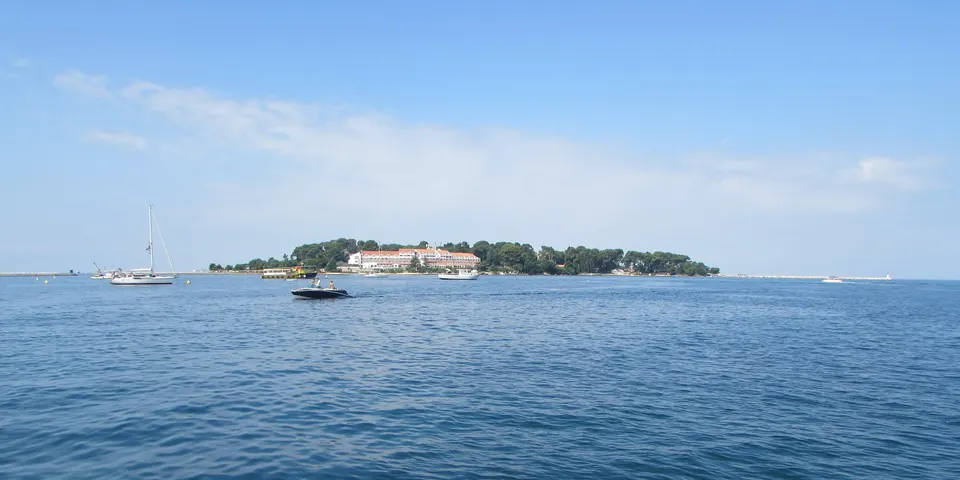
Smaller islets and reefs lie scattered along this stretch of coast, which is part of what makes the water so clear and the sea views so varied. Some can only be reached by boat; if you rent one, ask locally about where you may anchor and swim.
The Blue and Green Lagoons, south of the town
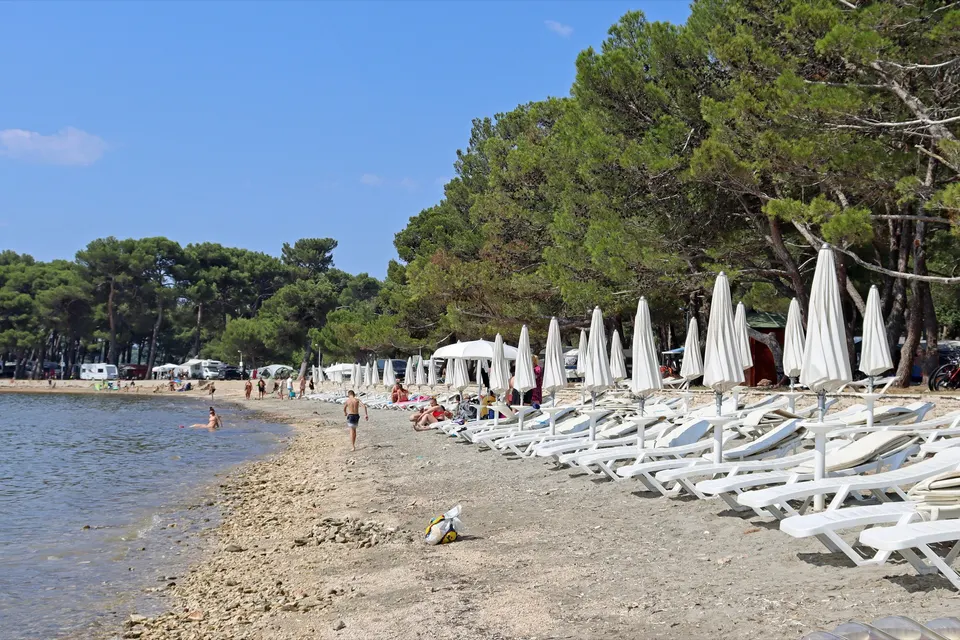
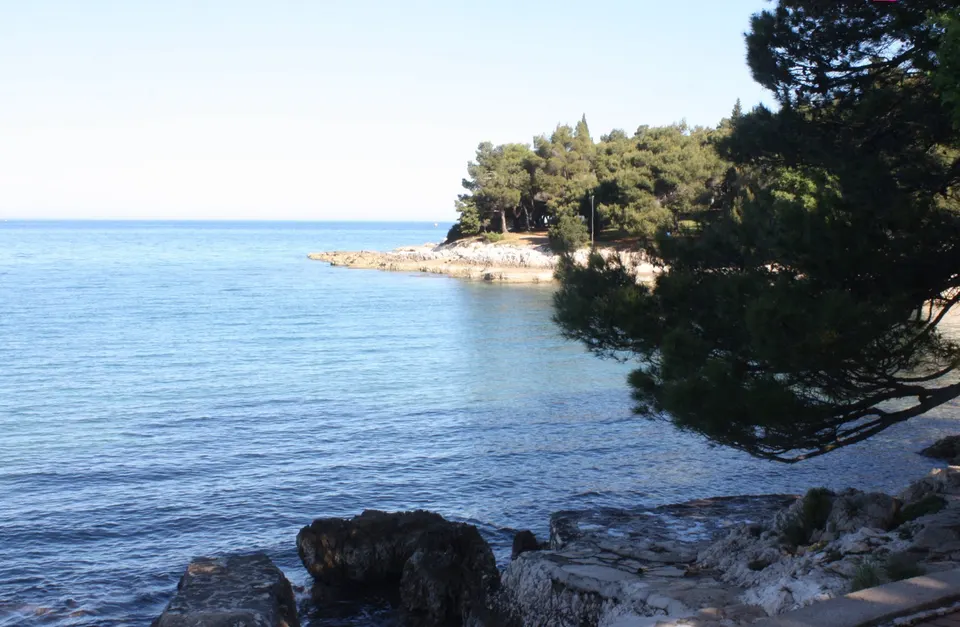
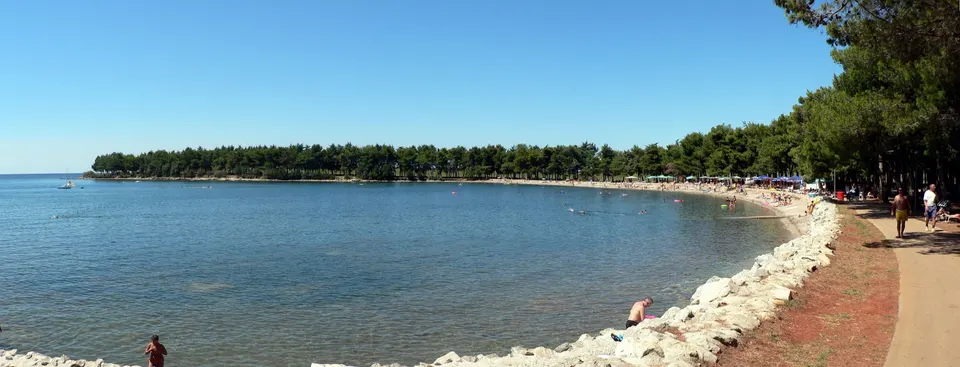
South of Poreč the coast is known as Plava Laguna and Zelena Laguna, the Blue and Green Lagoons. This is one of the most developed holiday areas in Istria: a long sequence of bays and headlands, shaded by pines, with hotels, apartments and campsites set back from the shore. The swimming is from rocks, pebble coves and paved terraces, often in shallow, calm water. A seaside path runs along much of this coast, and in summer a small tourist train links the area with the town.
The lagoons are busy in July and August, but they are also generous: walk ten minutes along the shore from the busiest point and you usually find a quieter rock. Further south, the coast continues towards Funtana and Vrsar, with more coves and the mouth of Lim Bay beyond.
Walk ten minutes along the shore from the busiest point and you usually find a quieter rock.
North of Poreč: quieter shores
North of the town, the coast towards Červar and beyond is lower, with long curved bays edged by pine woods and a mix of natural and built-up shore. It tends to feel calmer than the lagoons to the south, and it is easy to explore by bicycle along the coastal paths. Further north still lie Novigrad and the low, green shores of the north-west corner of Istria.
When is the sea warm enough for swimming in Poreč?
The shallow bays around Poreč warm up earlier in the year than the deeper water further south, which is one reason families like this stretch of coast. Most people swim from June to the end of September, and in a warm year well into October. July and August bring the warmest water and the biggest crowds. In late spring and early autumn the sea is fresher, but the pine woods are quiet, the light is soft and you can choose almost any rock you like. On windy days, look for a bay on the sheltered side of a headland.
Which Poreč beach for whom?
- Families with small children. The sheltered, shallow bays of the Blue and Green Lagoons and the calmer bays north of the town.
- No car. The town's own bathing spots, Sveti Nikola by boat, and the lagoons by the seaside path or the tourist train.
- Snorkelling. The rocky headlands between the bays, and the island shores of Sveti Nikola.
- Quiet. Early mornings anywhere, and the stretches between resort beaches north and south of the town.
- Sunsets. Any west-facing rock: the whole coast here looks straight out to the open sea.
Good to know
- Water shoes. Rocky and pebbly bottoms are the norm, and sea urchins live along the rocks.
- Shade. The pine woods help, but the busiest spots under the trees are taken early in high season.
- Boats to the island. Departures and timetables change with the season; check on the waterfront.
- Parking. Spaces near the old town and the lagoons fill quickly in summer. Walking or cycling is often faster.
- Season. June and September offer warm water and far fewer people than July and August.
Poreč makes beach days easy: a swim in town, a boat to the island, an afternoon under the pines of the lagoons. For more ideas along the coast, see our guide to the best beaches in Istria.