Istria's west coast faces the setting sun, and its harbour towns were built to look at it. Where to be when the day ends, from Savudrija to Kamenjak.
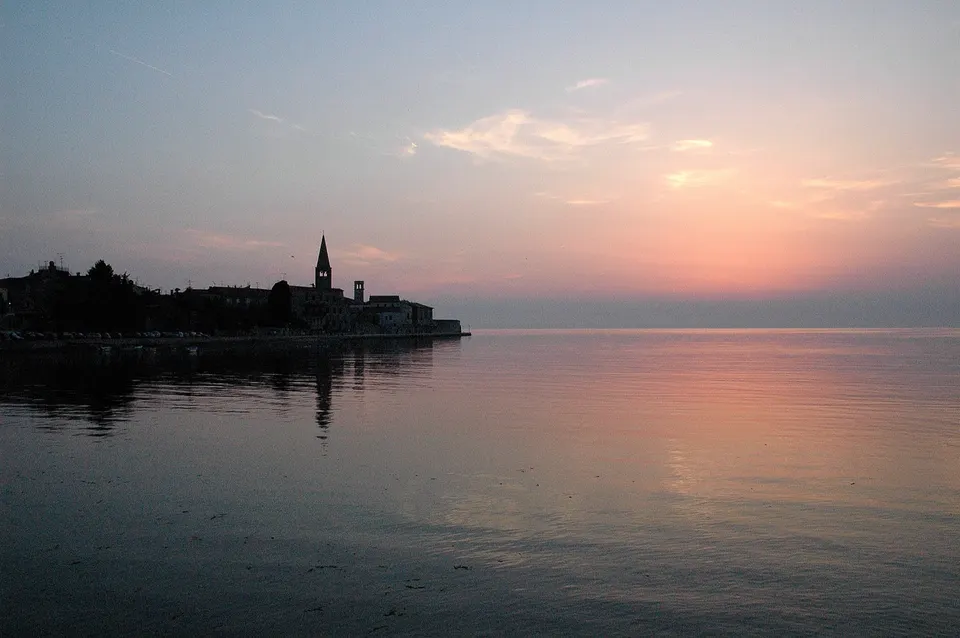
Geography is generous to Istria at the end of the day. The peninsula's long western coast looks straight out over the open Adriatic, so from almost every town between Savudrija and Pula the sun sets into the sea. On clear evenings the light turns the stone of the old towns honey-coloured, the water goes from blue to copper to violet, and whole towns gather on the waterfront to watch. These are the places worth planning an evening around.
Rovinj: the classic
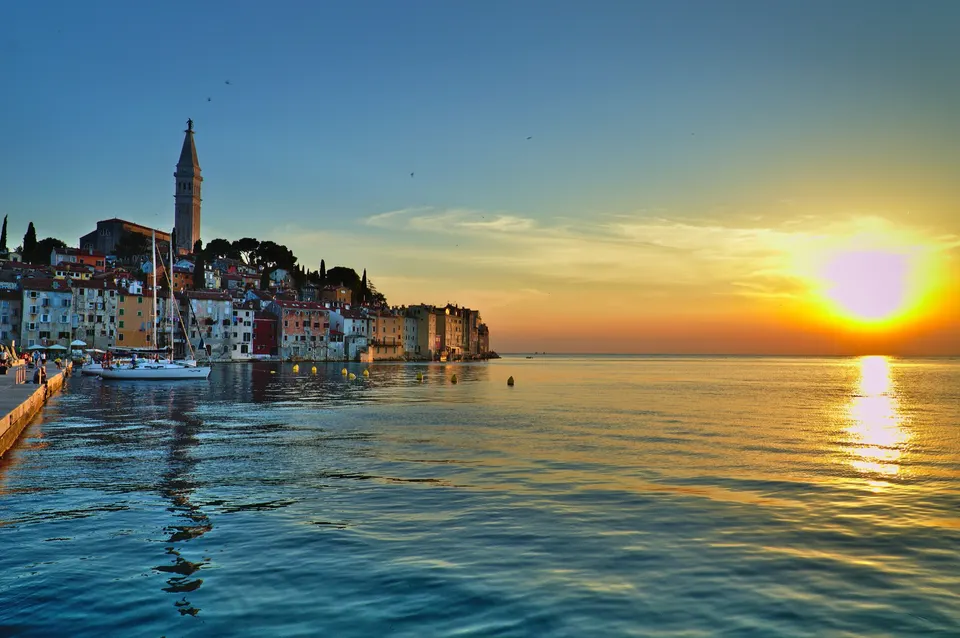
If you see only one sunset in Istria, see it in Rovinj. The old town sits on a former island, with St Euphemia's church at its highest point, and the western side of the town drops straight into the sea. The rocks below the church and the stone terraces along the shore fill up every summer evening with people sitting, swimming and waiting. For the view of the town itself silhouetted against the sky, walk out along the harbour or towards the Golden Cape and look back.
Poreč and Novigrad
Poreč's old town stands on a narrow peninsula, and the promenade along its western edge is a natural place to end the day, with the islet of Sveti Nikola offshore and the bell tower of the Euphrasian Basilica behind you. Novigrad, a little further north, is smaller and quieter: its old walls and the church tower stand on a point surrounded by water, and the low rocks along the shore are a calm place to sit as the sun goes down.
Savudrija and Umag
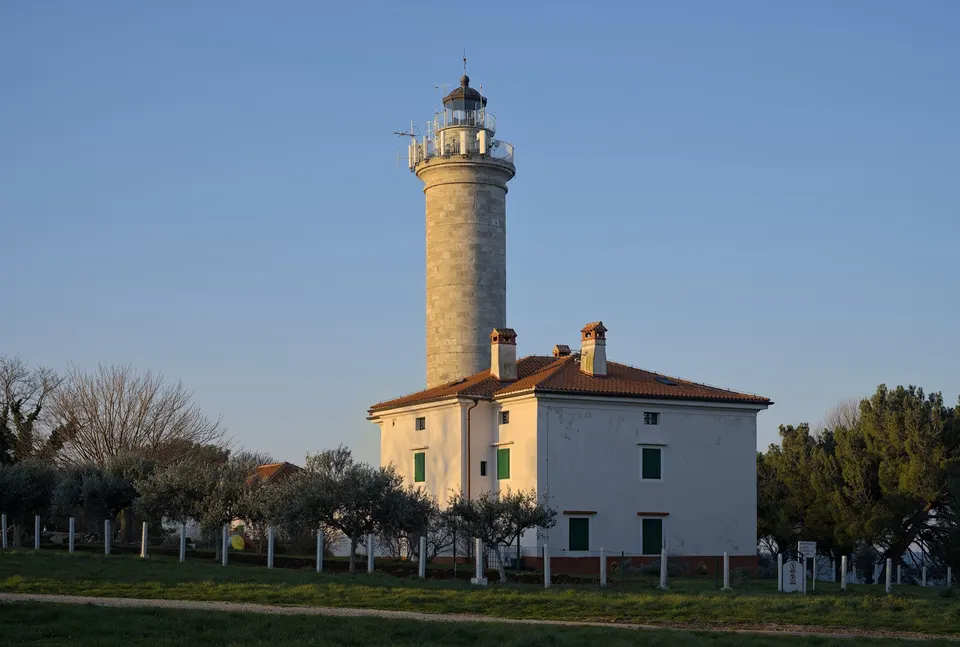
At the north-western tip of Istria, Savudrija's lighthouse stands over a low, open shore. It dates from the early nineteenth century and is often described as one of the oldest lighthouses in the Adriatic. There is nothing between you and the horizon here, and on very clear days you can make out the Italian coast across the Gulf of Trieste. Umag, just to the south, has a long waterfront that faces the same direction.
From almost every town between Savudrija and Pula, the sun sets into the sea.
Vrsar, Fažana and Pula
Vrsar is built on a hill above its harbour, and from the top of the old town, by the church, the view sweeps over the islets and the open sea. Fažana looks across the channel to the Brijuni islands, and the sun goes down beyond them; the long promenade, the fishing boats and the islands make a particularly gentle evening scene. In Pula, the best views of the sunset are from the peninsulas of Stoja and Verudela, where rocky coves and pine woods face west, or from the harbour, where the cranes of the old shipyard stand out against the sky.
Kamenjak: the wild version
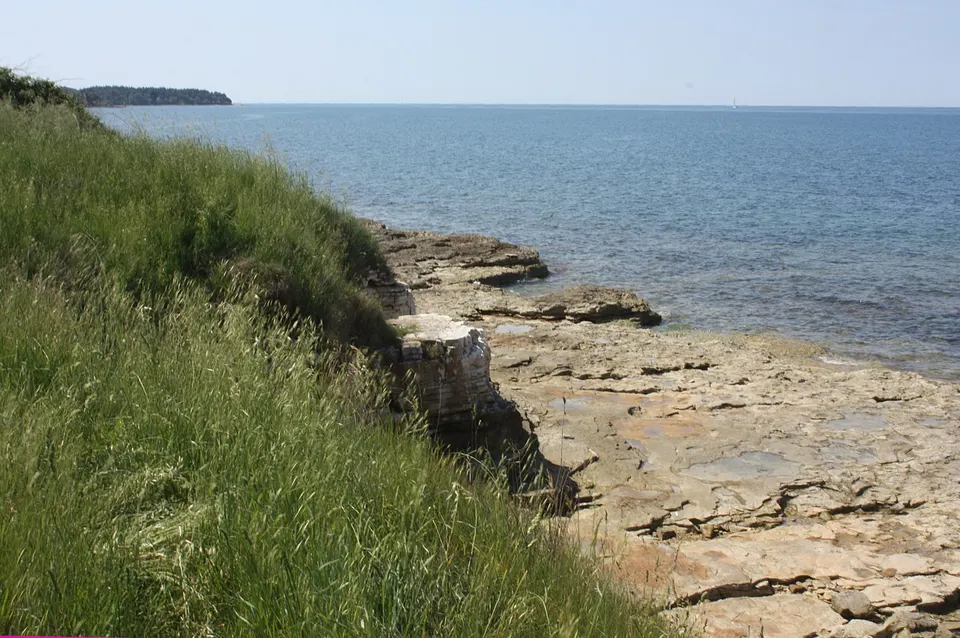
At the southern tip of Istria, the protected cape of Kamenjak offers sunsets with no town at all: just rock, macchia, sea and the lighthouse of Porer on its islet. Stay after the day visitors leave, find a flat rock on the western side of the cape and watch the sun go down beyond the lighthouse. Bring a torch for the walk or drive back along the unpaved tracks. Our guide to Kamenjak and Premantura explains how to get there.
Inland: sunsets over the hills
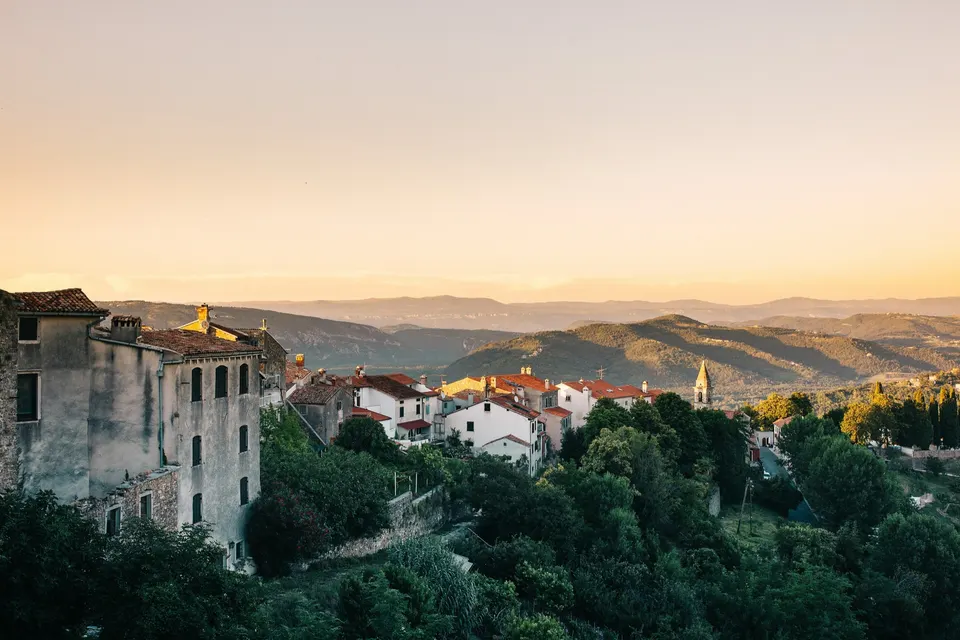
Not every great Istrian sunset happens at sea level. The hilltop towns of the interior, Motovun, Grožnjan, Oprtalj and others, look out over valleys and ridges, and in the evening the light falls across layer after layer of hills, vineyards and forest. Motovun's walls and Grožnjan's terraces are both fine places for it, especially in late summer and autumn when mist sometimes settles in the valleys. For more high places, see the best viewpoints in Istria.
From the water
Many harbour towns offer sunset boat trips in season, and watching the sun go down from the sea, with the town lights coming on behind you, is a different experience altogether. If you are sailing, an anchorage off Rovinj or among the islets of the west coast is hard to beat on a calm evening.
Why the light here is so good
Part of the magic is the stone. Istrian towns are built of pale limestone, which takes on the colour of the sky: pink, gold or orange as the sun sinks. The sea adds the rest, reflecting the light back onto the walls of the houses along the waterfront. In summer the long evenings stretch the show out, and in autumn the air is often clearer and the colours deeper. Late September and October bring some of the finest sunsets of the year, with warm evenings and far fewer people on the rocks.
It is also a very social moment. In the coastal towns, the hour around sunset is when people come out: for a swim, a walk along the riva, a glass of malvazija on a terrace. Joining them is one of the simplest pleasures of a stay in Istria.
Tips for a better sunset
- Arrive early. The best spots on the rocks in Rovinj and Poreč fill well before the sun goes down in summer.
- Stay late. The colours are often strongest ten or twenty minutes after the sun has disappeared.
- Watch the season. The sun sets further north in midsummer and further south in autumn, so the same place can frame it differently.
- Check the weather. A few high clouds make the most dramatic skies; after the bura, the air is often crystal clear.
- East coast? Rabac and the Kvarner side of Istria face east. Go there for sunrise instead.
And the best sunset of all may be the one from your own terrace. If you are planning a house on the west coast, it is worth thinking early about where the evening light falls and placing the table, the chairs and the lighting around it; our piece on terraces and long evenings is a good place to start.